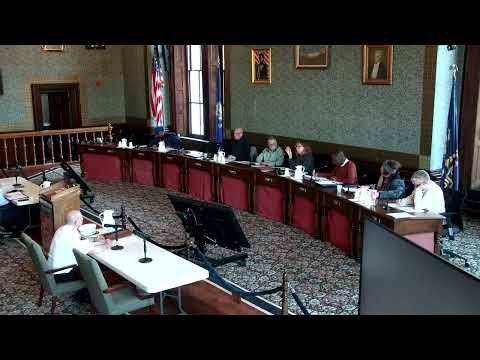
Norwich council probes fire budget as city pushes unified command and plans alerting upgrade
Loading...
Summary
Councilors pressed city leaders on a consolidated volunteer-fire funding line, a lawsuit with four volunteer companies and a planned station alerting system the city estimates could cost $400,000–$500,000 while the capital plan currently shows a $100,000 placeholder.
The Norwich City Council examined the Fire and Emergency Management Services budget and pressed city leaders on two linked issues: a consolidated volunteer fire funding line created amid litigation with several volunteer companies, and an urgent plan to replace a failing station alerting system.
City Manager John Nystrom told the council the volunteer funding was bundled into a single line because ‘‘we are now under a lawsuit by the 4 departments that are excluded from individual pages’’ and the city cannot predict the litigation outcome, so staff recommended consolidating the money to preserve the total amount while litigation proceeds. He said mediation has been ongoing and returned proposals have kept negotiations alive.
The fire chief framed the budget around ‘‘capability, reliability and sustainability,’’ saying the plan includes investments in training and four promotions to lieutenant to ensure consistent supervision across career and volunteer shifts. ‘‘This budget is ensuring that every resident of the city receives consistent professional emergency services every call, every day,’’ the chief said.
Councilors focused on the station alerting system after the Otis Street fire, asking how many times the system has failed and how the city plans to pay for fixes. The chief and the city manager said failures have occurred ‘‘at least a half dozen’’ times; three vendors assessed the system and gave a ballpark cost that they described as roughly $400,000–$500,000. The capital plan currently carries a $100,000 earmark as the city finishes procurement specifications and issues an RFP.
President Pro Tem told the chief and manager: ‘‘Find the money. Get it fixed.’’ City staff said vendors indicated they could be ‘‘turnkey’’ within weeks of a signed purchase agreement and that realistic deployment timelines once ordered would typically be measured in weeks to a few months depending on lead times and purchasing channels.
Councilors also asked about personal protective equipment (PPE) budgeting and turnout-gear standardization. The chief said the department moved PPE to a single lump-sum program to centralize inspection, inventory and replacement and advocated for a single citywide PPE specification to achieve economies of scale and ensure all personnel—career and volunteer—have equivalent protective ensembles.
On the litigation and the proposed ‘‘unified command’’ approach, the city manager said the goal is to preserve volunteer stations and local practices while ensuring that incident responses follow a single operational plan so that ‘‘you can’t have dissension or reluctance to follow commands of the incident commander’’ at major scenes. He said some volunteer departments declined to accept proposed reductions or operational changes and that a few subsequently filed suit; the city said it continues to negotiate and sought to avoid a court outcome that might undermine on-scene coordination.
No formal vote or final procurement decision was made during the hearing; staff pledged to return with vendor specifics and a procurement timeline once the RFP/bid process produces a recommended vendor.