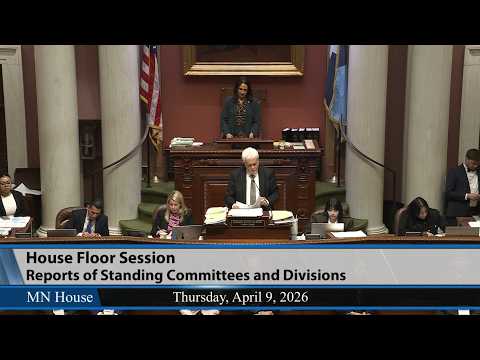
House approves package of technical and licensure bills on voice and roll calls
Loading...
Summary
On April 7 the Minnesota House unanimously passed a set of bills including a uniform electronic estate‑planning measure, dentistry licensure updates, barbering regulatory changes, veterinary medicine modernization (with a technical amendment), and a health‑board medical consultant expansion.
The Minnesota House on April 7 approved several noncontroversial bills affecting estate‑planning law, health professions and occupational regulation.
Senate File 3602, described by Representative Niska as an expansion of Minnesota’s electronic‑signature and remote‑notarization framework for estate‑planning documents, passed after a third reading. "It's a good step forward here in 2026," Representative Niska said, noting the measure builds on earlier enactments that permitted electronic wills.
House File 3516, a Board of Dentistry policy bill offered by Representative Schumacher, updates terminology, incorporates dental therapists into the guest‑licensure program and allows retired dentists to treat low‑income patients. "This bill will create greater access to dental services," Schumacher said, and the House approved the measure on third reading.
House File 3528, a technical bill aimed at supporting the barbering career field, was presented by Representative Sexton. Sexton said the bill eliminates duplicative rules, shortens re‑training after a partial exam failure and adjusts fees (the fiscal note estimated about $850 per year). The House gave the bill final passage.
House File 3718, a major update to statutes governing veterinary medicine, was amended on the floor to restore language regarding the Minnesota Board of Veterinary Medicine's seal. Representative Anderson described the legislation as a modernization of Chapter 156 and said it would help address shortages of veterinary professionals in Greater Minnesota. The amended bill passed.
Senate File 3402, which expands the list of providers who may serve as a medical consultant to community health boards (adding professionals such as physician assistants and certified nurse practitioners), was also approved; the author noted it passed the Senate earlier with a wide margin.
All of these measures were adopted by unanimous or lopsided votes as recorded on the House floor. Members said the bills together aim to modernize technical rules and expand access to services.