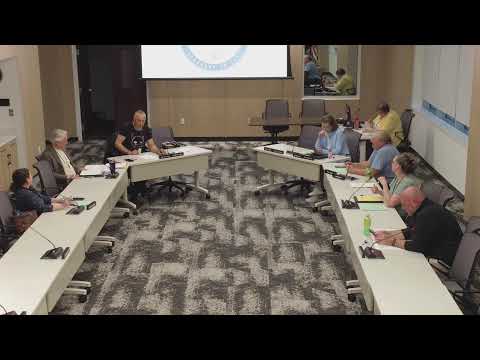
Champaign County committee approves 9‑month moratorium on large data centers after public comment and scheduling debate
Loading...
Summary
After public comments for and against data-center development, a Champaign County committee amended a proposed 12‑month moratorium to 9 months (270 days) and approved it, citing the need to give a task force and the Zoning Board of Appeals time to draft and review new zoning standards.
A Champaign County advisory committee voted to adopt a temporary moratorium on new data centers with at least 10,000 square feet of processing area, amending an initial 12‑month proposal to a nine‑month limit.
The committee considered testimony from labor and environmental stakeholders. Kevin Sage, president of the East Central Illinois Building and Construction Trades Council and business agent for Plumbers and Pipefitters Local 149, opposed a long moratorium and urged the county to set clear standards that allow responsible development. “Pressing pause on opportunity altogether does not,” Sage said, arguing that data centers bring construction jobs, apprenticeships and ongoing property-tax revenue.
Maggie Brunn, executive director of Prairie Rivers Network, and Tashal Brown, who said she works in local government, urged a one‑year pause to protect water resources and ratepayers. Brown cited a University of Michigan public-policy report she said found higher utility rates and large water and energy demands in some communities that accepted data centers.
John (zoning staff) told the committee the Zoning Board of Appeals had unanimously recommended approval of a moratorium at its February 5 meeting and that the county had received substantial comment both for and against. Committee members debated the appropriate length of a pause: the task force chair urged six months as sufficient for the data center task force’s initial work, while another member cited ZBA scheduling and municipal comment periods and argued for 12 months.
After extended discussion about scheduling realities—ZBA quorum challenges, municipal comment periods and staff capacity—a board member proposed (and the committee adopted) an amendment shortening the moratorium to nine months (270 days) as a pragmatic compromise. The amendment passed in committee; the moratorium motion (as amended) was then approved in committee by voice vote. The chair said the item would not be placed on consent and is expected to go to the full county board for final action.
The committee and speakers raised several implementation issues the task force and staff must address as the moratorium is implemented and a text amendment is drafted, including procedures for municipal comment, whether proposed standards should require closed‑loop cooling systems, how utility upgrades and costs would be allocated, and how the County will engage ZBA early in the process.
The committee adjourned at 7:22 p.m.; the moratorium will proceed to the full county board for further consideration.