Lifetime Citizen Portal Access — AI Briefings, Alerts & Unlimited Follows
Experts and lawmakers debate structure and risks of Washington’s new "millionaires' tax"
Loading...
Summary
Panelists dissected the newly passed tax, describing it as a targeted levy on top earners, questioning implementation details and legal vulnerability, and warning it could reshape business decisions and state revenue volatility.
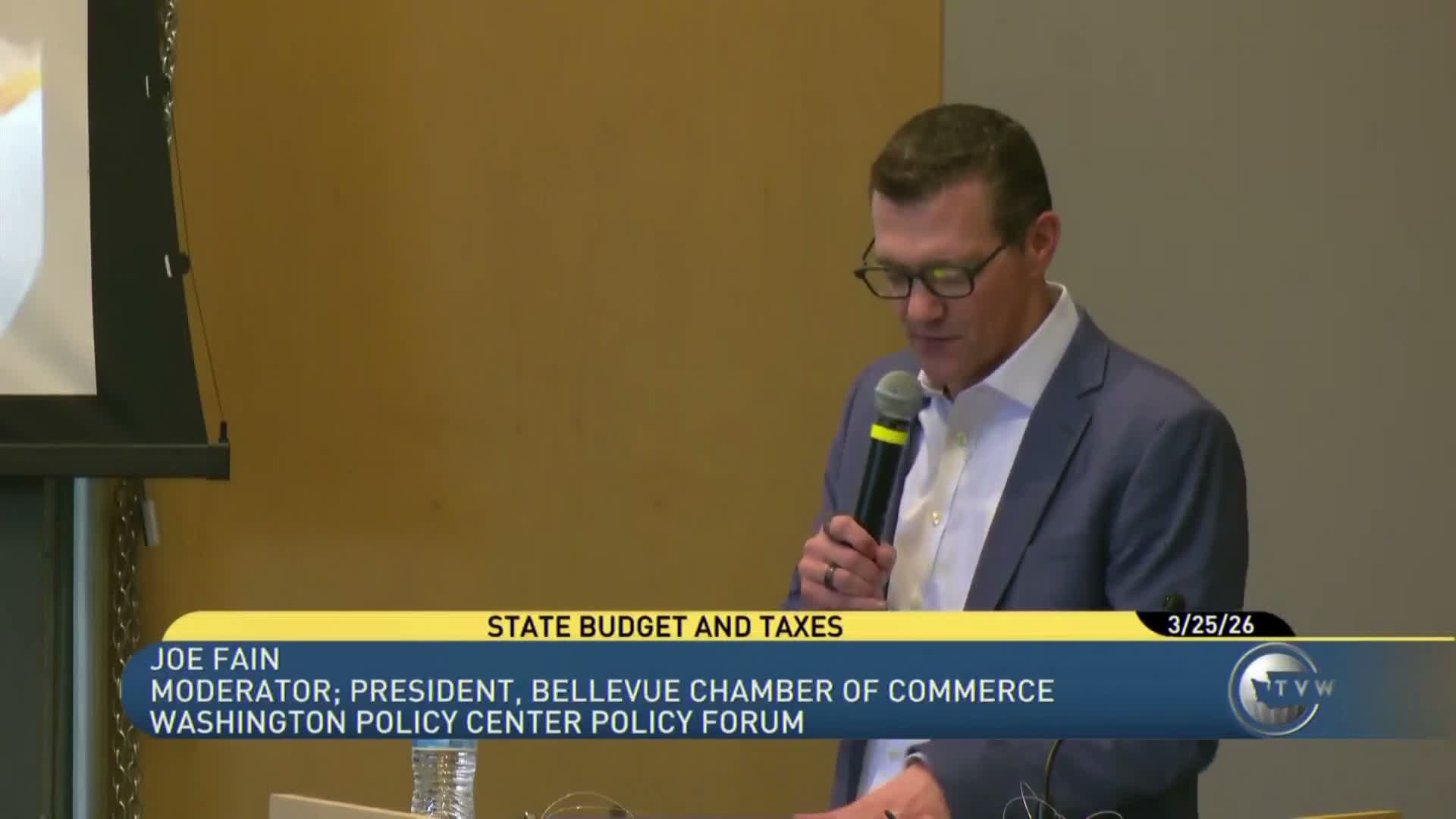
Joe Fain, president and CEO of the Bellevue Chamber of Commerce, opened a public forum in Bellevue to ask how the state’s new "millionaires' tax" is structured and what it will mean for Washington’s economy.
Ashley Washington, a tax professional with Deloitte, described the measure as "a 9.9% tax on income over $1,000,000," and said the tax’s operation will be unusually complex because of interactions with recent capital-gains and estate tax changes and existing business levies. "It's not an income tax — which is I mean, it is an income tax, but for all intents and purposes, we're not calling it an income tax," Washington said, noting clients and other tax professionals have many questions about implementation and legal exposure.
Ryan Frost, director of budget and tax policy at the Washington Policy Center, argued the tax places substantial burden on business owners because many affected taxpayers receive income through pass‑through entities. "We have never had more revenue in the state than we have now," Frost said to explain why he views the new levy as problematic in the current revenue environment; he warned that the accumulation of recent tax changes could spur some taxpayers to consider redomiciling.
Representative Larry Springer (45th Legislative District) — who voted for the measure — said the tax will raise roughly $3,000,000,000 a year and noted it "does not go into effect till 2029," while acknowledging courts and future legislatures can alter or refine its operation before revenue begins to flow. Audience members pointed out the tax year/implementation timing nuance — one asked whether the tax year is 2028 (paid in 2029) — underscoring that practical timelines matter for business and household decisions.
Panelists differed on how large the behavioral effects will be. Frost and others cited surveys and anecdotal reports that some business owners are considering relocation or other changes; Sandeep Kaushik, partner at Soundview Strategies, urged a careful cost–benefit approach, saying the rhetoric and the technical design of the levy both matter for whether capital flight is likely. "The devil is in the details," Kaushik said, noting marginal and effective rate differences for incomes just above the threshold.
Legal and political next steps were a recurring theme. Kaushik and other panelists expected a rapid legal challenge, pointing to historic Washington precedent on whether income may be treated as property in constitutional tests, and predicted at least one ballot effort before the tax would be implemented. "I will be shocked if we don't get a ballot measure long before it gets implemented," Kaushik said.
The forum closed with panelists and the moderator noting that the tax's ultimate impact will depend on implementation guidance, future rulemaking, court decisions and how future legislatures address regressivity or related tax-code adjustments.
The panel did not announce any formal actions; legal filings and potential ballot initiatives were identified as the next steps for opponents and proponents alike.