Get Full Government Meeting Transcripts, Videos, & Alerts Forever!
Get email alerts on the Property Taxation topic
No spam. Unsubscribe anytime.
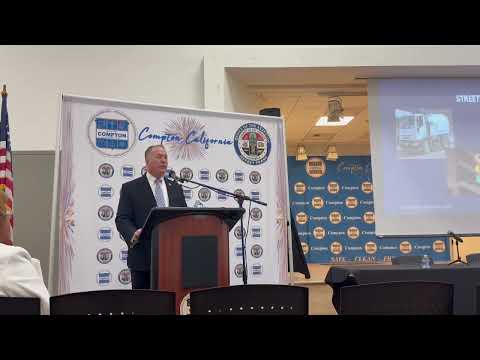
Assessor Frank outlines how property assessments, Prop 19 and homeowner services affect Compton residents
Summary
Los Angeles County Assessor Frank explained the assessors role, recent assessment-roll growth, how Proposition 19 changed inheritance rules, low take-up of the homeowners exemption in Compton, and new services (homeowner alerts and online e-services).
Assessor Frank, the countys elected assessor, told a Compton audience that his office appraises property but does not collect property taxes and described recent assessment-roll growth and services meant to protect homeowners.
Frank said the assessors office assigns market values when property changes hands and maintains the annual assessment roll that underpins local property-tax revenue. "We do not collect property taxes. I am not the tax collector," he said, explaining that the auditor-controller applies tax rates and the treasurer/tax collector sends bills.
Why it matters: property taxes fund schools, public safety and local services. Frank reported that the county assessment roll increased by about $82 billion (roughly 3.9%) from the prior year, and he said Comptons assessed value rose faster than the county average (he cited a 6.8% local increase).
Frank walked listeners through two common reassessment triggers: a change in ownership (including adding or removing people from a deed) and new construction, such as accessory dwelling units (ADUs). He warned that even transfers appearing to be administrative, like a quick-claim deed, can prompt reassessment and supplemental tax bills for remaining owners.
On Proposition 19, the 2020 amendment to Californias property rules, Frank summarized two main effects: it allows certain homeowners (those 55 or older, severely disabled or disaster victims) to transfer their tax base to a new home under specified limits, while narrowing the prior family-inheritance exclusions for many heirs. "Now the only property that you can inherit from your parents with the property-tax benefit is the home that your parents live in," he said, noting heirs typically must move into the property within 12 months and that only the first $1 million of value is exempted from reassessment.
Frank encouraged eligible homeowners to claim the homeowners exemption, which reduces assessed value by about $7,000 and typically saves roughly $70 a year at common tax rates. He estimated nearly half of qualified Compton homeowners do not apply for the exemption and urged local leaders to publicize the application.
To help detect title fraud and unauthorized deeds, Frank described a "Home Alert" email-notification service that notifies registered owners within 48 hours if a deed is recorded on their property, and an assessor e-service portal that allows owners to update mailing addresses, file for exemptions, or submit calamity relief claims online.
During the audience question-and-answer period, residents requested copies of the presentation slides and clarification about documentation required after an owners death. Frank said the city would receive the slides for distribution and reiterated that the assessors office requires notification of ownership changes; he also said the office often requests full trust documents to confirm details when property is held in a trust.
Frank noted the offices recent technology modernization: moving from legacy mainframe systems to a cloud-based platform, digitizing millions of property files and using new tools that sped post-fire reassessments (he said work that once could take nine months for thousands of properties was completed in roughly 90 days after the upgrade).
The presentation closed with Frank offering to take follow-up questions and council staff agreeing to distribute the slides.