Get Full Government Meeting Transcripts, Videos, & Alerts Forever!
Get email alerts on the Budget Cip topic
No spam. Unsubscribe anytime.
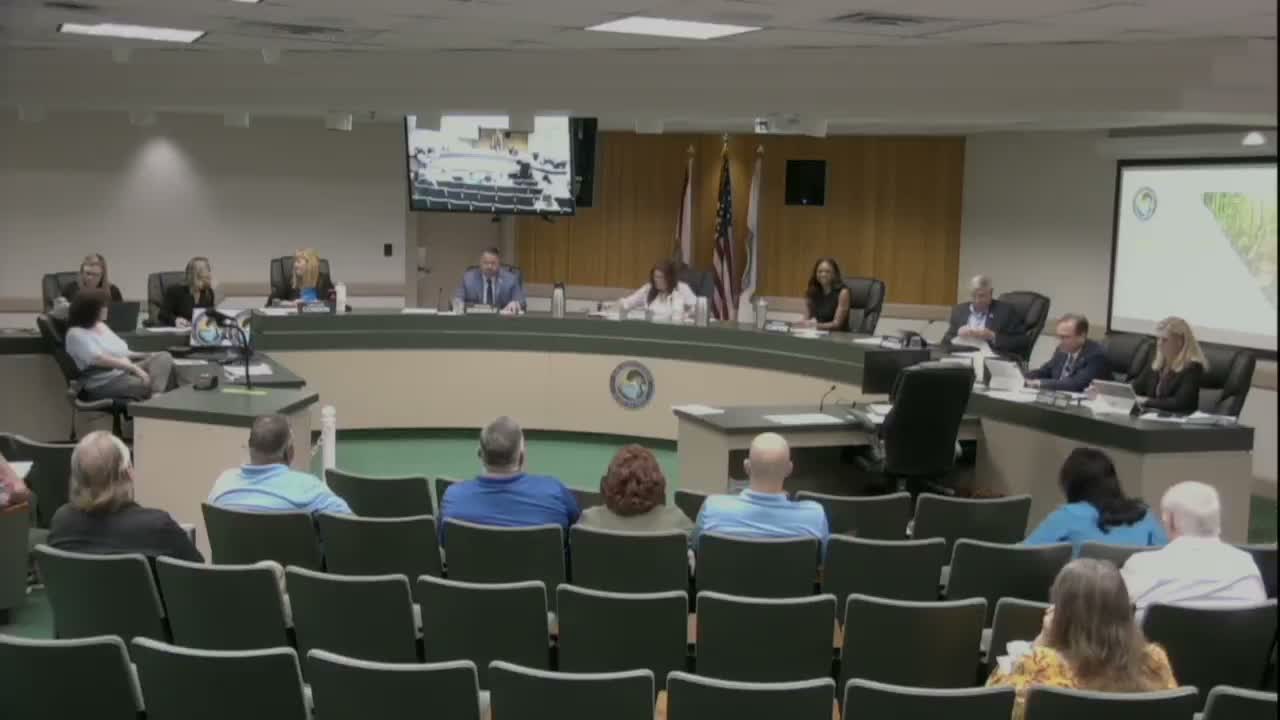
Clay County commissioners hear $371 million shortfall as staff seeks priorities for five‑year capital plan
Summary
Commissioners reviewed a draft five‑year Capital Improvement Plan that staff say shows a growing unfunded need (staff cited a rise from about $196 million to $371 million), highlighted public‑safety and stormwater gaps, and discussed revenue options including mobility and impact fees.
The Clay County Board of County Commissioners met March 10 for a workshop on next year’s Capital Improvement Plan and were told staff recommend adding roughly $41 million in year‑six projects while the overall unfunded need has grown substantially.
“Departments give us more information; the biggest one on here is really gonna be your IT side,” said the staff member leading the presentation, noting new towers, radio equipment replacement and other long‑term needs. A commissioner noted the shortfall had increased and asked for the source of the discrepancy; staff said updated departmental submissions and the inclusion of lifecycle IT items drove the change.
The board spent significant time pressing staff on how to pay for projects. Staff outlined revenue sources including sales and local gas tax, grants, impact and mobility fees, and bond proceeds and cautioned that some dedicated fees are restricted to the district or purpose where they were collected. “When you look at impact fees, you’ve got each district…that is where those monies and dollars have to be spent,” the presenter said.
Stormwater repeatedly surfaced as a funding priority. Commissioners were told $400,000 is budgeted for stormwater this year and next, but a stormwater study recommended about $5,000,000 for maintenance. “There’s 0 in the CIP for stormwater,” a commissioner said. Staff suggested a dedicated stormwater fee as one revenue option but cautioned the board it would be a policy decision to implement.
Staff also highlighted equipment replacement and transportation needs, noting an equipment/transportation line near $1.2 million in the plan and past spending near $2 million. Road resurfacing was presented with a roughly $11 million placeholder in the near term.
Board members asked staff to identify how mobility fees, impact fees and special funds could be reprioritized. Staff said mobility fees at current rates are projected to generate about $20 million in the short term, short of roughly $70 million identified for several priority road projects.
The presenter asked the board for direction on which year‑six projects to adopt and said staff will bring an updated CIP for formal adoption as part of the regular budget cycle. The county expects its operational budget to be refined through June 9, with staff returning to the board for decisions on fee studies and potential reallocation of funds.