Get Full Government Meeting Transcripts, Videos, & Alerts Forever!
Get email alerts on the Legal Land Use topic
No spam. Unsubscribe anytime.
City attorney briefs planning commission on 'site‑specific' rezones and appearance‑of‑fairness duties
Summary
Contracted counsel told the Benton City Planning Commission that site‑specific rezones are quasi‑judicial and must satisfy the comprehensive plan and four additional criteria; he urged careful factual findings to withstand possible court review and explained conflict/ex parte disclosure procedures.
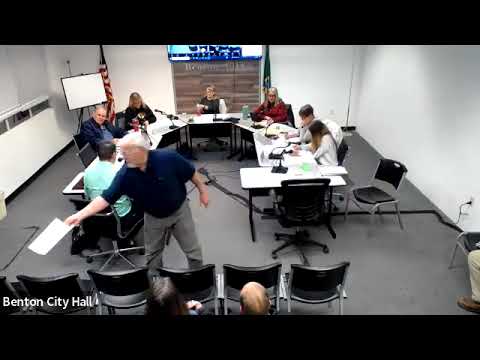
The Benton City Planning Commission received a detailed legal briefing on site‑specific rezones from the city's contracted counsel, who said those rezones function as quasi‑judicial proceedings and require strict attention to process and record‑building.
"Site‑specific rezones are quasi judicial," counsel said, explaining they mix legislative and adjudicative functions and therefore trigger Washington's appearance‑of‑fairness doctrines. He told commissioners the doctrine has three aspects — form, substance and appearance — and recommended a script to help commissioners flag conflicts and ex parte contacts early.
Counsel outlined five review criteria the commission should use when drafting findings for a map amendment: whether the proposed rezone conforms to the Benton City comprehensive plan; whether the property is suitable for uses allowed in the requested zone; whether public facilities (roads, water, sewer) are adequate; whether the proposed use is compatible with neighboring land uses; and whether the amendment addresses a need not met by the present zoning.
Commissioners asked whether the commission may use executive session to discuss quasi‑judicial matters; counsel said he would confirm the rules and follow up but described two options: an executive session when litigation or privileges apply, or other paths to allow private staff‑counsel work on draft findings. He cautioned that weak factual findings can invite a fast court review under land‑use petition procedures, which can result in judicial orders requiring a council to adopt an ordinance.
He emphasized the practical division of labor: staff prepares factual background and draft findings (addresses, lot sizes, utility information), but the commission must base its conclusions on the open‑record hearing and the code's criteria. Counsel offered to work with staff to turn commissioners' on‑the‑record statements into polished findings for the commission to adopt and forward to council.
The briefing concluded with counsel recommending commissioners record any disclosures of bias, financial interest, ex parte communications, or prejudgment before taking a quasi‑judicial matter up for hearing.