Get Full Government Meeting Transcripts, Videos, & Alerts Forever!
Get email alerts on the Community Use Policy topic
No spam. Unsubscribe anytime.
Board directs policy review to allow fees for fields, energy use and remove nonprofit youth exemption
Summary
The Howard County Board of Education voted to direct the superintendent to begin a policy review of Policy 10.020 to (1) institute a revised energy fee for all community users, (2) change facility fees to “use fees” to include sites and grounds, and (3) rescind the exemption for nonprofit youth organizations; the board emphasized a formal policy process and public hearings before any implementation.
The Howard County Board of Education on Feb. 19 directed the superintendent to begin a formal policy review of Policy 10.020 (Community Use of Facilities) that would allow the system to charge energy fees for all community users, expand facility fees to include sites and grounds such as fields and diamonds, and rescind the exemption currently held by nonprofit youth organizations.
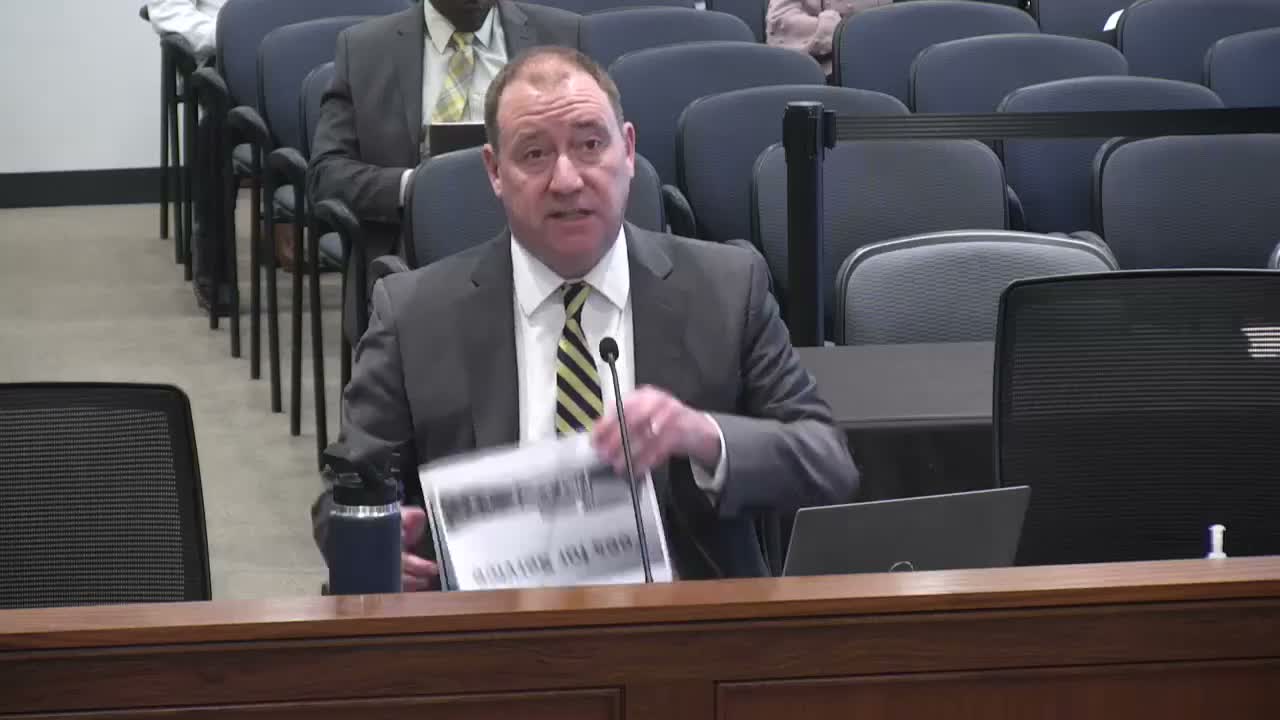
Board Chair Mallow put the motion to the board after staff described the distinction between policy language and the separate fee chart the district posts online. Anthony DiBella and Lanan Xu, who had introduced the OBRC recommendations earlier in the meeting, were cited as part of the day’s context for fee discussions. Cornell Brown, the chief operating officer, said the administration views the motion as creating a path to “lay out what we think and work with doctor Perry to establish a schedule for the policy review committee” and to consider when any changes might be implemented.
Board members debated timing and public engagement. Miss Watts urged that the policy process include opportunities for public testimony, saying the timeline is “very, very long” and that board members should ensure community members can weigh in before implementation. Miss Moseley and others raised concerns about the fee chart and how fee changes would be reflected (in policy definitions versus the separate fee schedule posted online). Dan Lubel, the district’s executive director of capital planning and construction, explained that the policy edits would mostly change definitions and exemptions in the policy itself while the fee chart on the website contains the dollar amounts.
The motion directed the superintendent to have the policy office work with the board on the revisions and carried on a recorded vote of 8‑0. The board and staff emphasized that the action was to begin the policy review, not to adopt new fees immediately. As Chair Mallow and other board members repeatedly noted, any change would still go through the standard policy review and public hearing process and the board would retain final authority over any approved policy and start date.
What happens next: staff will scope the policy review, propose a schedule to the board’s policy review committee and return with specific draft language and an updated fee chart. The board explicitly left open whether changes would be effective for the July 1 start of the school year or later, pending the policy review timeline and operational considerations.
Sources: board meeting Feb. 19, 2026. Quotes and details are attributable to participants who spoke in the meeting transcript, including Cornell Brown and Dan Lubley.