Cochise County Health Department expands youth coalitions, in‑school programs and quitline outreach to curb vaping
Loading...
Summary
Health-promotion staff outlined plans to rebuild youth coalitions, offer alternatives to suspension that include cessation education, run school assemblies and youth compliance checks, and connect residents to ASHLine (a free Arizona quitline); the department is targeting outreach to people experiencing homelessness this year.
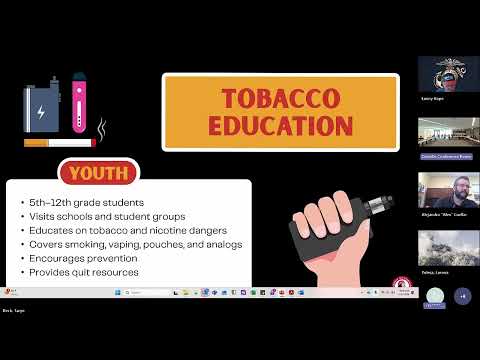
Amanda Eckroft, health promotion manager for the Cochise County Health Department, told the Board of Health the department is rebuilding youth coalitions and expanding school- and community-based tobacco-prevention work aimed at reducing vaping and nicotine use among adolescents.
“My name is Amanda Eckroft, and I am the health promotion manager at Cochise County Health Department,” she said, then outlined programs that include peer-to-peer youth coalitions, school assemblies where students may turn in vapes without penalty, and alternative-to-suspension curricula that deliver education and referrals instead of exclusion. Eckroft said the department’s recent Red Ribbon Week outreach reached about 1,300 students at 10 schools.
She described enforcement partnerships — youth compliance checks coordinated with state authorities to identify retailers who sell to minors — and diversion training for sellers who fail checks. The department promotes ASHLine (the Arizona quitline) as a free cessation resource that provides telephone counseling, personalized text support and free nicotine-replacement therapy for adults who want to quit.
Why it matters: county officials tied prevention work to broader health goals, saying youth-led education and school-based alternatives reduce missed school days and give students concrete resources to quit. Eckroft said the department will prioritize outreach this year to people experiencing homelessness and will expand partnerships with clinics, hospitals and community organizations to increase referrals to ASHLine.
Board members suggested recording or packaging curricula for wider access and asked about partnerships with school districts; Eckroft said she welcomes collaborations and will explore fidelity requirements for online modules.
What’s next: the department will continue outreach, promote the July 29 community event and coordinate training for referral providers so clinicians and community partners can signpost residents to cessation services.