Get Full Government Meeting Transcripts, Videos, & Alerts Forever!
Get email alerts on the Mfa Funding topic
No spam. Unsubscribe anytime.
Douglas County approves off‑cycle addiction‑fund grants for housing, public health and first‑responder wellness
Summary
The Douglas County Board of Commissioners voted unanimously March 18 to approve a set of one‑time allocations from the Municipalities Fight Addiction Fund for supportive housing debt relief, a van for Artists Helping the Homeless, Amethyst consulting, law‑enforcement wellness assessments, school‑based prevention and a public‑health testing pilot.
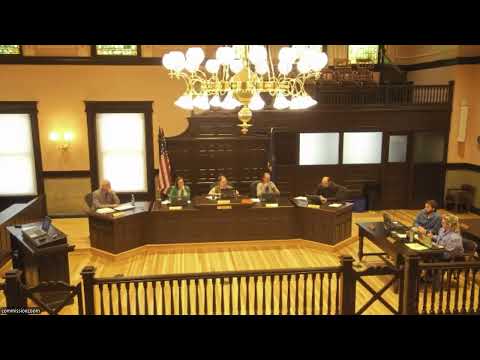
On March 18, 2026, the Douglas County Board of Commissioners voted unanimously to approve a package of one‑time allocations from the Municipalities Fight Addiction Fund (MFAF) that staff had recommended being distributed outside the normal budget cycle.
The approved package includes funding agreed to during the meeting for: paying off the mortgage on Cardinal Housing Network’s 1046 New Hampshire Street property (applicant reported an outstanding balance of about $107,900), a replacement van for Artists Helping the Homeless (commissioners agreed to fund the vehicle but expressed caution about paying for advertising wraps), a phase‑2 Amethyst Place consulting engagement (staff and applicants clarified $16,000 was already spent in phase 1 and the remaining MFAF portion is about $32,000), a county‑wide law‑enforcement and first‑responder mental‑health wellness assessment (staff estimated a total program cost of about $85,100), a DECA school‑based prevention bridge request ($35,000), and a Lawrence‑Douglas County Public Health pilot for testing uninsured and underinsured residents for HIV and hepatitis (roughly $50,000 was discussed). Commissioners directed staff to document the final allocation language and contract exhibits before agreements are executed.
Why it matters: these funds are intended to expand prevention, treatment and recovery supports tied to substance‑use harms. Commissioners debated whether to prioritize getting money to partners quickly versus moving requests through the regular budget process for greater vetting. Several commissioners urged keeping county dollars local and requested stronger, documented rubrics for how staff evaluates applications against Exhibit E of the MFAF regulations.
What commissioners and staff said: Sarah, who introduced the item for staff, told the board the off‑cycle process was an experiment that produced useful applications but added burdens on staff and applicants. Several commissioners pushed staff to require measurable outcomes and data attachments in future agreements; one commissioner warned against using county funds to pay consultants based outside Douglas County. Hannah, representing Cardinal Housing Network, described private donations of about $50,000 that would supplement county assistance and said mortgage paydown would improve the nonprofit’s financial stability. Dustin Moore of Artists Helping the Homeless reported the group provided about 21,801 rides to clients between Jan. 1, 2022 and March 1, 2026, and described the urgency of replacing a high‑mileage van.
Vote and next steps: After discussing priorities and process concerns, a commissioner moved to approve the funding requests “as discussed during the meeting.” The motion was seconded, taken by voice vote and the chair announced the motion passed unanimously. Staff said they will record the approved allocations in the meeting minutes, update award amounts where applicants provided revised figures, add contract exhibits where required, and return any recommendations about special‑alcohol fund designations or future rubric changes during the budget process.
The board then took several routine appointments and closed the meeting.