Get Full Government Meeting Transcripts, Videos, & Alerts Forever!
Get email alerts on the School Budget topic
No spam. Unsubscribe anytime.
Winchester budget workshop: presenters warn lost COVID grants and special-education costs drive proposed increase
Summary
At a Winchester School Board budget workshop, staff outlined a proposed increase tied to lost federal COVID relief, tuition and transportation cost rises and higher wages and benefits; members discussed staffing, capital needs and limited one-time reserves but did not vote on the budget.
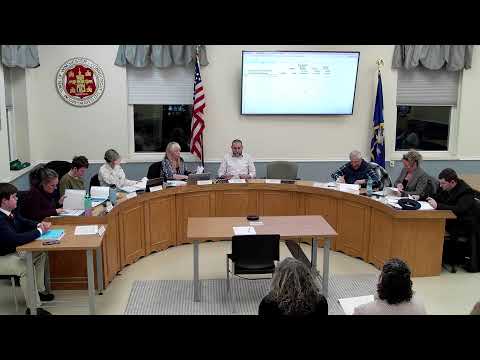
Winchester School Board members and district staff spent a workshop session reviewing a draft school budget and the drivers behind a proposed increase, with presenters saying lost federal COVID relief and rising special-education costs left few easy options to close the gap.
Presenter (speaker 1) walked the board through the packet’s increase analysis, saying roughly a third of the proposed increase is allocated to in-district tuition, a third to Gilbert and a third to Hinsdale Pearson and out‑of‑district tuition. “That special education teacher isn’t negotiable,” the presenter said, arguing cuts to special-education positions would likely trigger more expensive out‑of‑district placements. The presenter also noted that some COVID-era grants that had covered positions — including a school mental health specialist and a literacy program rollout — have sunsetted and are “never coming back,” leaving recurring costs without replacement revenue.
Board members probed a range of options. One member suggested charging out‑of‑town students a tuition fee as a revenue source; the presenter estimated charging $1,000 per month for 20 students could yield about $200,000. Another member asked whether volunteer or college‑partnership models could replace some aide or monitor roles; staff cautioned that paraeducator roles tied to Individualized Education Programs (IEPs) require continuity and federal compliance and generally cannot be met by short‑hour volunteers.
The presenters reviewed other budget lines: transportation costs, benefits and wages were called out as major drivers; custodial overtime fees and occasional rentals provide minor non‑public revenues; and an example $30,000 line for winter sanding would not be fully offset by buying a truck. The district reported limited one‑time reserves: a non‑lapsing fund balance of about $44,000, while Gilbert reported larger carryovers that board members asked staff to investigate for potential assistance.
District staff noted ongoing vacancies and higher contractor costs for some services, and discussed the tradeoffs of outsourcing positions versus retaining lower in‑district pay scales. The presenter described a live budget tracking approach for special-education tuition costs — combining actual and forecast numbers by contacting receiving schools daily to update estimates.
Capital needs and timing also drew discussion. The presenter described a developing capital plan and said the district had submitted capital items to the town manager; members flagged a bus turnaround project at Gilbert that may be eligible for state funding and noted some town‑owned building repairs remain the town’s responsibility. The presence of a local solar farm was noted as a small recurring revenue source (about $18,000 last year), but members said its operational status had varied.
Several members urged caution about measures that would reduce teacher pay or benefits, highlighting recruitment and retention risks. The presenter said beginning teacher pay next year is roughly $44,456 and warned that changes in staff health‑insurance contributions or other reductions would hit lower‑paid staff hardest.
No formal budget vote occurred at the workshop. The board scheduled the next workshop and a February 12 meeting with the item moved to an action slot so members could vote if they were ready; members also agreed staff should prepare more detail for follow‑up meetings. The meeting ended by approving a motion to adjourn.