Get Full Government Meeting Transcripts, Videos, & Alerts Forever!
Get email alerts on the Local Governance topic
No spam. Unsubscribe anytime.
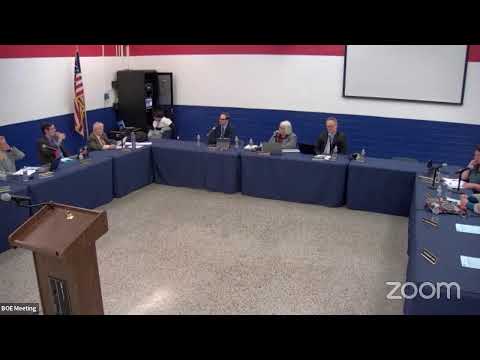
Berkeley Heights board approves consent agenda, revises maintenance reserve transfer and debates consultant payment and remote voting policy
Summary
The board approved routine minutes and resolutions, updated a maintenance-reserve transfer to $86,003.03 for maintenance work, voted on a contested consultant invoice (one or more no votes/abstentions recorded), and debated a draft remote-participation policy and timing for November/December policy reads.
The Berkeley Heights Board of Education moved through its consent agenda, approved a range of administration and personnel resolutions, and addressed several finance and governance items that drew extended discussion.
Early in the business portion the board approved routine minutes and consent items across administration, education and personnel. During business, members amended a maintenance-reserve transfer estimate: a board member asked to add $15,008.50 to cover sinkhole and inlet repairs at Mountain Park, which updated the item to $86,003.03; the change was motioned, seconded and approved by roll call.
A separate finance discussion centered on a consultant invoice (check number 211073). At least two board members voted no on that invoice and one member abstained because of a conflict of interest (the member's company appeared in the bill list). The board attorney advised that, because the matter may involve contract interpretation and potential dispute, counsel would review the circumstances and the board could discuss legal advice in executive session as needed.
On governance, the policy committee presented draft language to permit limited remote participation for board members who are medically unable to attend in person or who will be out-of-state, subject to prior board approval. Members debated the legal and sunshine-law implications, quorum concerns and practical pathways (including limiting remote participation for certain items such as executive-session votes). The board agreed to proceed with first readings of proposed policy changes at the November meeting and second readings in December unless the board directs otherwise.
Separately, a bylaw change clarifying how members of the public identify themselves before speaking (by name and one of several affiliation options) was amended on the floor: the board voted to add the word "or" back into the identifying language (bylaw 0167) so speakers can say, for example, their municipality or their school affiliation. That motion passed by roll call.
The meeting record shows other routine business motions (transportation software updates, SDA emergent grant application for a press box, and acceptance of several PTO donations). Public commenters raised neighborhood conduct and event-security questions; administrators pledged to notify building principals and coordinate with police as appropriate.