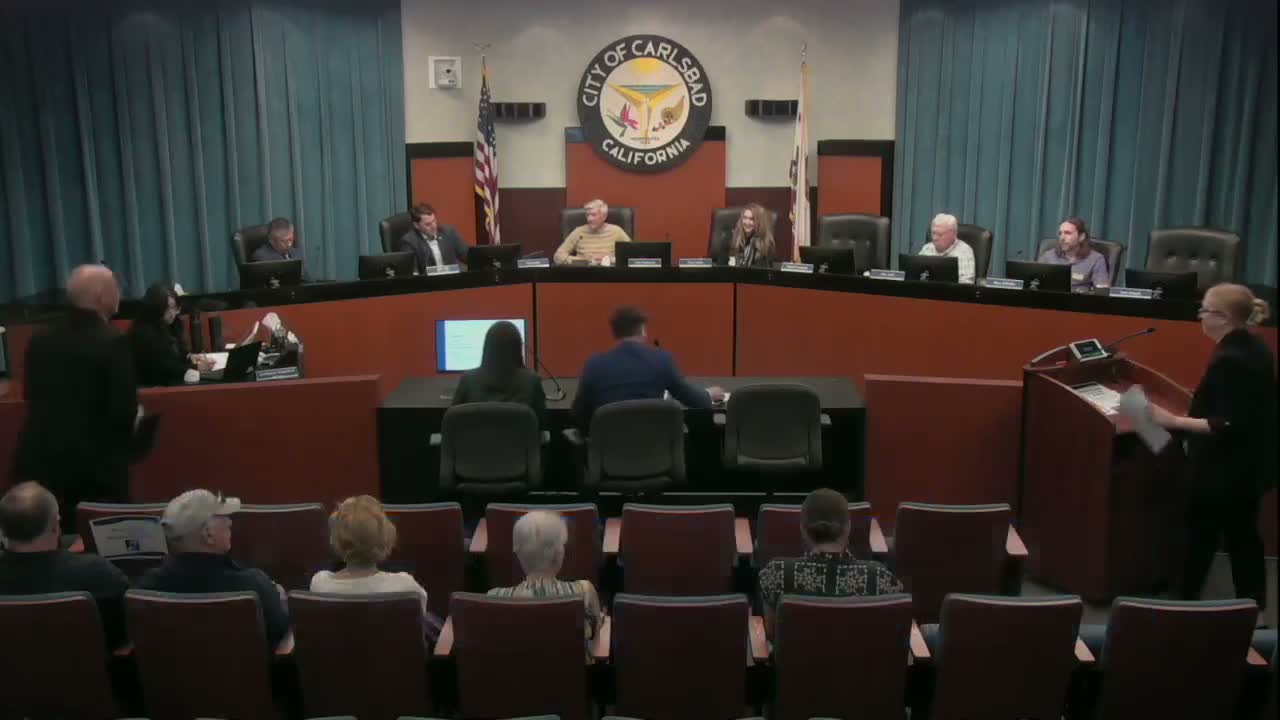
Carlsbad commission delays Terramar sidewalk decision, votes to resurface streets and study parking
Loading...
Summary
After extensive public comment warning that sidewalks would remove beach parking and worsen coastal access, the Traffic Safety and Mobility Commission voted to recommend pavement resurfacing now and defer sidewalk/curb decisions until the outcome of a pending redevelopment (NRG) and potential siting of Fire Station 7.
Tom Frank, the city’s transportation director and city engineer, reviewed concept designs and outreach results for the Terramar Area Coastal Improvements project, telling the commission the scope could include repaving and restriping Carlsbad Boulevard and Cannon Road and installing sidewalks on one or both sides of the street.
Frank said adding sidewalks would remove parking currently used on the dirt shoulder and that the estimated impacts vary by configuration: 23 spaces removed on the west side, 11 on the east side, and 34 if sidewalks were installed on both sides. He also said the city received roughly 347 online responses during a March outreach window and that responses were split between supporters and opponents.
At the meeting, more than a dozen residents testified. Carol Scurlock said the proposed west‑side 8‑foot sidewalk "would eliminate parking for surfers and beachgoers" and push cars into narrow neighborhood streets. Several residents echoed concerns about safety at key intersections, the lack of ADA access beyond some segments and the condition of a stairway to the beach (several speakers said stairs are collapsing). Susan Hollander raised environmental concerns, saying bluff erosion has worsened since a previous staircase installation and urging that increased access could further undermine the bluff.
Other commenters, including neighborhood residents and a Surfrider Foundation representative, urged the commission to preserve coastal access and parking; some supported restriping and drainage improvements but opposed removing parking. Commissioners explored alternatives such as narrowing travel lanes, creating new parking in Cannon Park, or waiting to see how the large NRG property redevelopment (and the potential siting of Fire Station 7) would change parking availability.
Following discussion, Chair Coelho moved that the commission recommend City Council proceed with pavement resurfacing/overlay for the project limits, defer hardscape improvements (sidewalks, curbs, gutters) until the NRG land‑use situation is resolved, and direct staff to study Cannon Park parking options and coordinate with the state on bluff areas. The motion was seconded and passed.
Next steps: staff will present the commission’s recommendation to City Council, pursue resurfacing and restriping work as warranted, and return later with options for sidewalks or other hardscape once the NRG property status and related infrastructure plans are clearer.