Lifetime Citizen Portal Access — AI Briefings, Alerts & Unlimited Follows
Carlsbad staff outline EV charging master plan, seek commissioner feedback
Loading...
Summary
City staff told the Traffic Safety and Mobility Commission they will prepare a Clean Mobility Charging Master Plan to identify 10–15 near‑term EV charging sites, perform a gap assessment of existing infrastructure and utility capacity, and position the city for grant funding; commissioners pressed staff on costs, equity for multifamily housing and competition with private chargers.
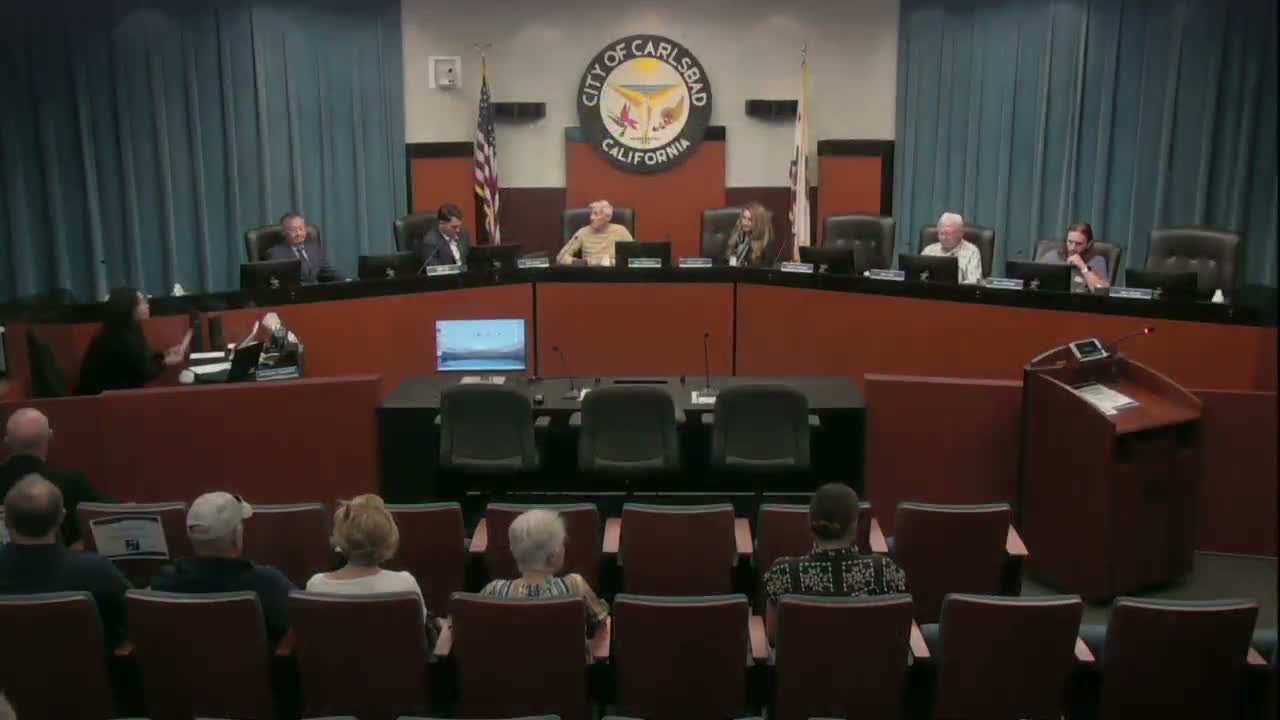
Nick Gorman, an associate engineer, and Kylie Martin of the Climate Action Plan Division presented a proposed Clean Mobility Charging Master Plan, saying it will identify near‑term sites, evaluate utility capacity and prepare the city to pursue grants and public–private funding.
The presentation said transportation accounts for about 51% of Carlsbad’s greenhouse‑gas emissions and described Measure T8 in the city’s Climate Action Plan as the policy driver for expanding public zero‑emission vehicle and bicycle charging infrastructure. “Developing a clean mobility charging master plan fulfills the climate action plan’s measure T8,” Martin said, adding the plan will prioritize visible, reliable infrastructure to drive adoption.
Staff said the plan will use data collection and outreach to produce site‑specific recommendations and a gap assessment of existing chargers, utility capacity and travel patterns. Gorman said the study will identify roughly “10 to 15” recommended near‑term locations to make the city competitive for implementation grants and to support future project design.
Commissioners asked whether the city will pay ongoing operating costs or rely on grants and whether city‑installed chargers would compete with private providers. Gorman replied the study will examine funding models and implementation grants but that long‑term operations will be determined on a project‑by‑project basis. Deputy City Manager Paz Gomez said existing city chargers for non‑city vehicles generally charge users now and that the city has used vendors such as ChargePoint.
Commissioners and commenters raised equity and multifamily housing concerns: one commissioner noted condominium owners often pay commercial rates and third‑party billing fees to enable chargers at shared properties. Katie Hendrick, the city’s Climate Action Plan administrator, explained statewide policy and building‑code changes are factored into the city’s greenhouse‑gas projections and that the plan will consider code requirements and incentives for new development.
Staff estimated the study could take about 18 months and said it will include public engagement (intercept surveys, online surveys) and coordination with utilities to determine where capacity exists. Gorman said the plan will explore public‑private partnership models, grant opportunities and site readiness so the city can be competitive for funding.
Next steps: staff will gather input from the commission and begin outreach and data collection to complete the gap assessment and bring site recommendations back to the commission and City Council.