Get AI Briefings, Transcripts & Alerts on Local & National Government Meetings — Forever.
Cherry Hill officials propose 7.4% tax levy hike as health‑care and transportation costs swell
Summary
At a special board meeting, district finance staff laid out a $14M–$25M structural deficit and a tentative 7.4% tax‑levy increase that would generate about $14.8 million; administration says roughly $14.5 million in cuts remain likely even if the increase is adopted.
Mister Schimpf, the district finance officer, told the Cherry Hill Board of Education on a special budget night that the district faces a structural deficit that could range from roughly $14 million to $25 million depending on tax levy choices and other variables. He said the administration is proposing a tentative 7.4% increase in the school tax levy to generate about $14.8 million in additional revenue while also identifying roughly $14.5 million in required spending cuts.
The proposal is driven largely by sharply higher employee health‑benefit costs and transportation expenses, Schimpf said. He told the board that initial carrier estimates showed a medical premium increase of about 27% and prescription costs of about 33%; after negotiation, the medical renewal was reduced to about 19.9% (roughly $7 million) and prescriptions to 27% (about $3 million), leaving roughly a $10 million increase to benefits. Renewed transportation contracts and added routes add about $1.3 million, he said.
"We were able, through our broker, to negotiate our renewal with our medical carrier down to 19.9%, which is about a $7,000,000 increase, and a 27% increase on our prescription plan, which was another $3,000,000," Schimpf said. "So we're still looking at roughly a $10,000,000 increase to our employee health benefit line." (Mister Schimpf)
Schimpf explained how the 7.4% figure is composed: the 2% cap would yield roughly $4 million, an extraordinary health‑benefits waiver could add about $7 million, and about $3.39 million of previously banked cap would be available for 2627 if the board opts to use it. Even with those three pieces, he said, the district would still need to identify approximately $14.5 million of spending reductions; his team has targeted roughly $8 million in non‑personnel reductions and $6.5 million in personnel reductions.
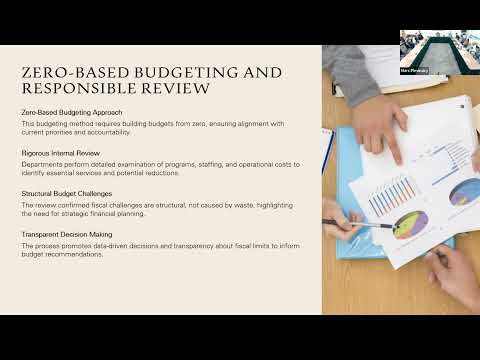
The administration emphasized that the non‑personnel reductions were developed through a detailed, line‑by‑line, 0‑based budgeting review and that many cuts would still be painful. "These are things that are needed and necessary to continue providing the types of programs and services we do here at Cherry Hill," Schimpf said, adding that the administration looked to minimize classroom‑level impacts where possible.
Board members pressed for clarifications on several fronts, including whether the transportation CPI‑tied contracts are locked for 2627 (Schimpf said they are), what eliminating preschool would save (Schimpf said some state preschool aid offsets a substantial portion of costs but that transportation and certain operating costs remain), and whether additional state aid or future formula changes could later reduce the levy burden (he said future state aid could create an opportunity to reconsider the levy but cautioned that state aid is volatile and not a stable revenue source).
Board members also raised the broader policy issue of school funding in Trenton. Several members described long‑running frustration with the state funding formula and urged coordinated advocacy to state lawmakers ahead of and after the tentative budget vote.
Schimpf estimated the impact on taxpayers: a 7.4% levy increase would raise the average assessed home’s school tax bill by about $420 annually. The administration said it will ask the board to adopt a tentative budget at the board’s next meeting to meet the statutory submission deadline; the Department of Education’s technical review follows, with a public hearing and final adoption expected in late April.
No formal budget vote was taken at the meeting; the administration asked the board to consider the tentative budget at the next regular meeting so the district can meet the March 27 submission deadline.
What happens next: the board will consider a tentative budget vote at its upcoming meeting (the administration emphasized there will be additional opportunities for discussion and revision between tentative adoption and final adoption), and community members were urged to contact state legislators about the funding formula and the district’s fiscal outlook.