Antarctica warming about 3°C since 1950s, scientists tell UN Ocean Conference
Loading...
Summary
At the SDG Media Zone during the United Nations Ocean Conference in Nice, ITV reporting and Antarctic scientists described rapid warming—about 3°C since the 1950s—ocean-driven glacier loss, large calving events and risks to sea-level rise, carbon storage and marine food webs.
At a SDG Media Zone session held at the United Nations Ocean Conference in Nice, science correspondent Martin Stu and scientists aboard the research ship Sir David Attenborough warned that Antarctica is warming rapidly and that ocean-driven heat is accelerating glacier loss.
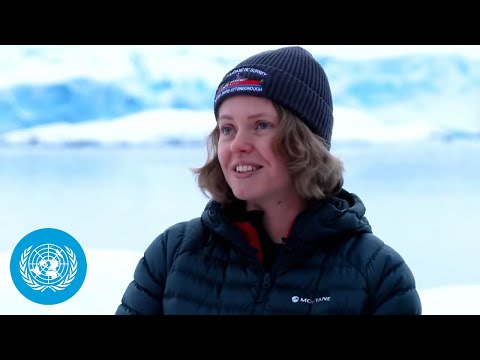
Martin Stu, a science correspondent with ITV reporting from the ship, told attendees that "Antarctica is warming fast" and said scientists aboard the vessel had been able to approach glacier fronts more closely than expected because of unusually low sea ice. He described repeated calving events and said, "Somewhere between 3 and 20,000,000 tons of ice fell into the ocean in front of them," an episode the team is studying for its effects on ocean mixing.
Rhiannon Jones, introduced by Stu as a specialist in how biology and chemistry interact in the ocean, told the session that "the Southern Ocean ... is globally an integral region for carbon storage" but warned that warming and sea-ice decline could reduce its effectiveness as a long-term carbon sink. Jones explained that changing ocean mixing and chemistry resulting from fresh water discharge and melting glaciers can release carbon from deep waters and alter nutrient supplies that sustain phytoplankton and krill, key components of the Antarctic food web.
Mike Meredith, an oceanographer and lead author of the Intergovernmental Panel on Climate Change, linked the retreat in sea ice to ocean warming driven by human activity and described the broader climate implications: "It also removes a protective barrier from around Antarctica and can actually contribute to the destabilization of the ice sheets." Meredith emphasized that fieldwork requires extensive contingency planning and robust platforms like the Sir David Attenborough to collect winter data otherwise unavailable.
Speakers placed the scale of recent sea-ice loss in stark terms. Martin Stu said the region now has about 1,500,000 square kilometers less sea ice compared with 30 years ago, an area he compared to roughly six times the size of the United Kingdom. Stu also cited modeling reported by the team that, even in an optimistic scenario limiting warming to 1.5°C, polar melting could raise sea levels by about 1 centimeter per year toward the end of the century, a rate the program described as large enough to affect future generations.
Scientists on board are studying the local processes that follow large calving events: how the sudden release of fresh water, nutrients and heat into the ocean drives mixing, how that may generate strong waves or underwater disturbances, and how those processes cascade through biological communities. Jones warned that disruptions to nutrient supply could have downstream effects on krill and higher predators such as seals and whales.
Despite the warnings, speakers framed their reporting with some notes of optimism grounded in past conservation successes. Martin Stu cited whale recoveries after hunting bans as an example that action can produce change. Meredith said, "It isn't game over yet. We can still avoid the worst case scenarios," while stressing that much faster policy action informed by science will be required.
The session was a media briefing and Q&A, not a policymaking meeting; there were no votes or formal decisions. Raghi Omar, the session host and international news affairs analyst with ITV, closed the session after the reported package and the scientists' answers to student questions.