BBMR director asks Guam Legislature to approve $25M emergency appropriation as typhoon approaches
Loading...
Summary
BBMR Director Lester Carlson told the Committee of the Whole the $25 million general‑fund request would allow proactive pre‑storm response (rentals, heavy equipment, mayoral assistance, shelter readiness) and post‑storm recovery if needed; senators pressed for a breakdown between response and recovery, stronger reporting requirements, and alternatives such as tapping the rainy‑day fund.
BBMR Director Lester Carlson told the Guam Legislature’s Committee of the Whole on April 11 that the administration is seeking a $25 million general‑fund appropriation to prepare for and respond to an approaching typhoon, and to cover recovery costs if the storm causes damage.
Carlson said the storm was currently stationary and forecast to strengthen and pass over Guam, and that the governor’s emergency declaration—normally funded at $250,000—would not be sufficient for large‑scale preparation and response. "$250,000 doesn't get you much backhoe rental when you're down in the Barcinas area," he said, describing the need to rent heavy equipment, stage supplies at shelters and provide mayors with immediate funds for local response.
Why it matters: the bill would draw directly from the general fund to create a ready pool of money for proactive measures—clearing drainage in flood‑prone neighborhoods, renting equipment, and moving supplies to seven predesignated shelter schools—so the government can act before roofs are lost or roads are blocked. The administration also emphasized expedited reporting: mayors would have 45 days to report expenditures and the administration would provide a 60‑day post‑event accounting.
Lawmakers repeatedly pressed Carlson for a clear separation between pre‑storm "response" spending and post‑storm "recovery" assistance, which typically depends on damage assessments and can include individual assistance subject to FEMA rules. Carlson said the storm's eventual severity would determine the split and that the administration did not yet have a definitive dollar breakdown. "I wish I could give you a definitive answer," he said. He also offered flexibility on the requested amount, saying he would not "hold the line at 25" if the Legislature preferred a smaller sum.
Several senators raised alternatives and constraints. Some argued the rainy‑day fund—statutorily harder to access but specifically reserved for emergencies—should be considered instead of using general‑fund balances that may be earmarked for other priorities. Carlson responded that the general fund balance was present and that the rainy‑day fund is a last resort; tapping it would require a higher legislative threshold.
Lawmakers also asked about past storm spending and reimbursements: Carlson said the administration fronted significant funds for Typhoon Mawar, and that some response costs were not FEMA‑eligible. Multiple senators requested an updated accounting of prior appropriations and reimbursements; Carlson agreed to provide updated reports and pledged full documentation for any new expenditures tied to Typhoon Sinlaku.
On distribution and local needs, the bill directs $100,000 to each mayor. Senators questioned whether that amount is adequate for larger villages and whether mayors could use those funds for immediate individual assistance before the storm. Carlson said purchase orders could be cut to vendors quickly if the bill passes, and he welcomed amendments to tailor mayoral allotments and explicitly authorize DOE personnel pay for shelter duty.
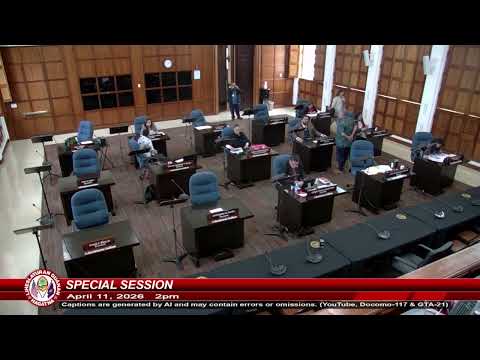
Committee procedure and next steps: the Committee of the Whole resolved into two rounds of questioning and accepted testimony from Director Carlson and OFB staff. Several procedural motions earlier in the special session (adopting the agenda, waiving certain items, deeming Bill 16‑s to have its first reading, and placing it on the second‑reading file) carried with no objections. The panel was released and the committee recessed; amendments remained open before the second round.
Outstanding items and accountability commitments: Carlson committed to fund‑coding Typhoon Sinlaku expenditures so transactions can be tracked separately, to submit required reports to the Legislature, and to provide updated balances on previously authorized Mawar funds. Several senators signaled they would propose amendments to change the mayoral allotments and to add explicit language protecting existing appropriations for Guam Memorial Hospital and other agencies.
The Committee did not take a final vote on the substantive appropriation during the session covered by this transcript; amendments and final action were deferred to the next phase of the Committee’s proceedings.