Get Full Government Meeting Transcripts, Videos, & Alerts Forever!
Get email alerts on the Strategic Plan topic
No spam. Unsubscribe anytime.
Urbana School District 116 board adopts 2025–30 strategic plan with targets for reading, discipline and equity
Summary
After two years of research and community input, the Urbana School District 116 board approved a five-year strategic plan that sets numeric goals for student achievement, disciplinary disproportionality and districtwide priorities including a new 'portrait of a graduate.' The plan passed by roll call vote at the May 5 study session.
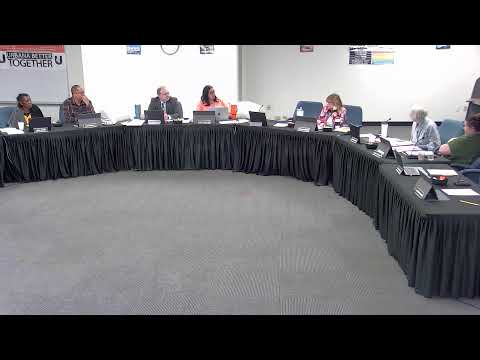
The Urbana School District 116 Board of Education voted May 5 to adopt a five-year strategic plan that sets measurable targets for student learning, behavior and equity across the district.
The plan, presented over more than two hours of discussion, aims to lift English language arts (ELA) proficiency on the Illinois Assessment for Readiness (IAR) to 30% and math proficiency to 27% by the 2029–30 school year, with interim key performance indicators for each year. Board members and district staff said the targets are based on recent IAR baselines (ELA ~12.5% and math ~9.2% for 2023–24) and MAP testing trends.
District leaders framed the strategic plan as a data-driven roadmap. The plan follows three phases of work: preliminary analysis of district performance, wide community engagement (about 299 survey responses and multiple listening sessions), and collaborative goal-setting that produced the plan’s four priority areas: student growth and achievement; staff development and retention; family and community as partners; and district systems and operations. A new “portrait of a graduate” lists six competencies — critical thinking, communication, adaptability, perseverance, self-management and social awareness — the district intends to teach K–12.
Equity and discipline goals drew particular attention. The equity strand sets a 50% reduction by 2030 in disciplinary disproportionality for Black students and for students with individualized education programs (IEPs). The culture-and-climate goals include a 25% increase in favorable staff and student climate scores and a 20% reduction in tier‑3 exclusionary incidents that lead to suspensions or expulsions. District staff said those aims will be pursued through PBIS, restorative practices, targeted tiered interventions and new professional development.
Board members pressed for clarity on how goals will be measured and who will be accountable. Assessment staff and strand leaders described the use of MAP and IAR data, subgroup projections, and an implementation plan that opens working groups this month for community and teacher participation. The plan will be monitored by a steering group drawn from the strategic planning participants and reported to the board twice a year.
The board approved the plan by roll call. Members recorded affirmative votes during the meeting’s formal action items; the board chair then confirmed the motion passed. District officials said next steps include summer professional development, establishing measurable annual KPIs, launching working groups, and placing public progress updates on the district website.
The plan’s adoption is the start of an implementation phase, district leaders emphasized: crafting specific action steps, embedding professional learning into each strand, and expanding stakeholder involvement beyond the 60-person strategic planning team that drafted the goals.
The board also set a schedule to report progress and invited community members to join ongoing working groups once the administration posts sign-up information.