Get Full Government Meeting Transcripts, Videos, & Alerts Forever!
Get email alerts on the Wildfire Rebuilds topic
No spam. Unsubscribe anytime.
Gorge commission posts rebuild FAQ, signals flexibility for wildfire survivors
Summary
The Columbia River Gorge Commission shared a new FAQ to help homeowners rebuild after recent wildfires, clarifying 'like‑for‑like' rebuilds, cultural‑review rules and temporary housing limits while promising flexible case‑by‑case handling for disaster survivors.
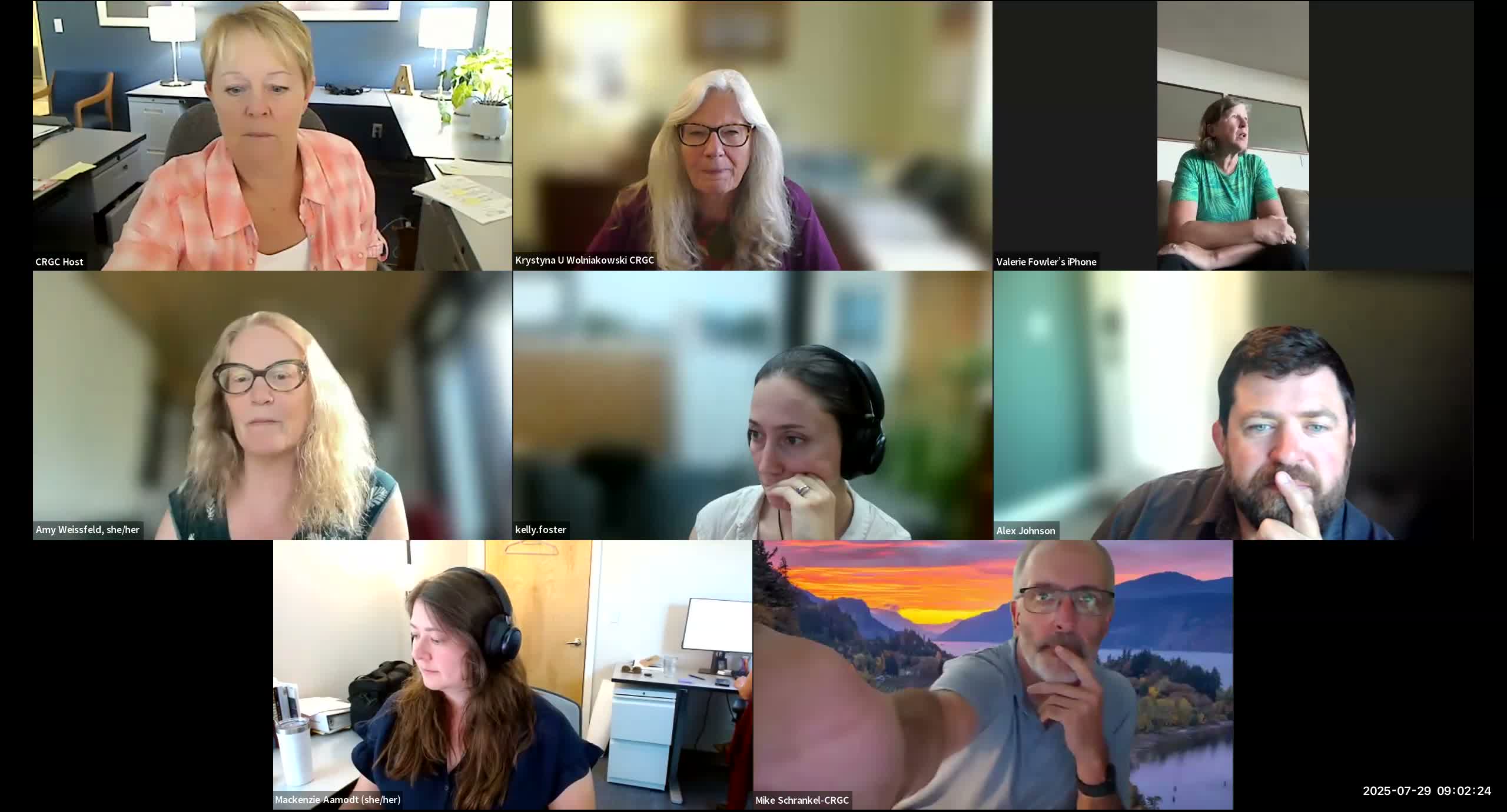
The Columbia River Gorge Commission’s communications committee on Thursday reviewed a just‑released FAQ intended to speed rebuilding for residents whose homes and outbuildings burned in recent wildfires.
The FAQ, drafted by staff member Mackenzie, translates commission ordinance language into plain English and aims to answer common insurance and permitting questions. "These were taken straight from our ordinance," Mackenzie said while walking commissioners through the document, which will be posted on the commission website and included in a rebuild application packet.
Commissioners and staff emphasized one immediate point for homeowners: when a property owner rebuilds in the same location and with essentially the same design, the commission will generally treat that as a "like‑for‑like" rebuild. Under that approach, footprint increases of up to 10% are allowable without triggering a full new review. Mackenzie said a rebuild in a different location or a substantially larger structure would be reviewed as a new building and could require a cultural‑resources survey with the U.S. Forest Service.
Commissioner Valerie Fowler, who described losing nearby structures, urged quicker approvals and clearer communication from county emergency officials; she said the speed of the fire "was just terrifying" and stressed the urgency for residents trying to return home. Staff and commissioners agreed to add clearer, affirmative language to the FAQ so it reads as "we intend to work with residents" rather than passive regulatory text.
Staff also addressed temporary housing. The commission’s rules allow on‑site RVs or temporary structures for up to 60 days, but Christina (staff member) told the committee the commission does "not intend to chase people out after 60 days" in disaster circumstances and will work to communicate extensions or flexibility where public health and safety permit. Commissioners said that if the commission formally decides to extend timelines in disaster zones, they will bring policy changes through the public process; meanwhile staff will treat affected applicants with flexibility.
The committee discussed operational steps to speed rebuilding: coordinating simultaneous review with county planning departments so applications are prioritized, using historical commission records (prior decisions and floor plans) to help homeowners who lack original drawings, and adding examples in the FAQ (for example, listing “barn” or “accessory building”) so non‑residential structures are clearly covered.
Staff said the FAQ and an application packet will be placed under a prominent "fire update" button on the commission website and distributed at county offices and upcoming community events in areas such as Parkdale. Commissioners also discussed targeted outreach — including using public records to identify affected addresses and mailing information packs to owners — and asked staff to report back on feasible steps to do that quickly.
The committee did not take formal votes on rule changes at the meeting; staff said they will present analysis of whether a plan amendment or full management plan review is required at the September full commission meeting. For now, the FAQ is intended as immediate, actionable guidance and the commission will handle extensions and special cases on a case‑by‑case basis.