Get Full Government Meeting Transcripts, Videos, & Alerts Forever!
Get email alerts on the School Facilities Energy topic
No spam. Unsubscribe anytime.
Design-build firm pitches HVAC, LED and energy-savings project to Rappahannock schools
Summary
A design-build team from Snyder presented a business case for consolidating HVAC/mechanical upgrades, LED lighting and building automation at Rappahannock County schools, citing roughly $290,000 in current annual utility costs and an estimated 20% energy savings from scope 1–2 measures; the firm proposed a fixed-price contract and offered to return for a joint meeting with supervisors.
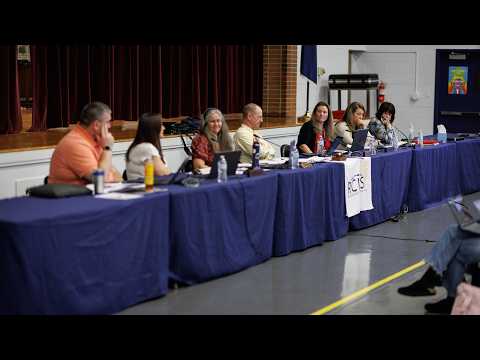
A design-build team told the Rappahannock County school board on Wednesday that a consolidated approach to mechanical, lighting and controls work could tackle deferred maintenance more quickly and generate energy-savings funding to offset project costs.
"As mentioned, my name is Abby Weigle," the presenter said at the start of the firm’s presentation. Abby Weigle and a colleague described three priorities for the proposal: addressing deferred mechanical maintenance, improving classroom comfort (including adding cooling where it does not exist), and leveraging energy-savings measures to create an additional funding stream.
Key details presented: the division currently spends roughly $290,000 annually on utilities across two schools; Snyder estimated that a scope 1 and 2 package plus energy measures could yield about a 20% reduction in energy costs. As an example financing illustration, the presenter cited that rolling measures into a 20‑year loan could produce a project in the roughly $1,000,000 range.
Procurement and contractor model: Snyder framed the work as design‑build (one firm responsible from project conception through construction), offering a fixed-price contract that the firm said would minimize client change orders and place construction liability with the contractor. The presenter said Snyder does not run a shared‑savings program and would not take the division’s energy savings as payment.
Technical and local‑vendor points raised in Q&A: board members asked about LED lifespan (commercial fixtures were characterized as lasting roughly 8–10 years or about 80,000–100,000 hours), building‑automation benefits and the firm’s approach to subcontractor selection; the firm emphasized its use of local subcontractors and offered to phase work to match the district’s budget.
Next step: the presenter and staff agreed Snyder will return for a joint meeting with county supervisors to discuss how the project might fit into the shared CIP and budget timeline.
The presentation and Q&A are part of ongoing capital planning; the board did not take an action on the proposal at the meeting.