Get Full Government Meeting Transcripts, Videos, & Alerts Forever!
Get email alerts on the Education Kpi topic
No spam. Unsubscribe anytime.
Stockton Unified highlights increases in AP, IB and dual‑enrollment access in KPI presentation
Summary
District presenters showed year‑to‑year growth in AP participation (about 144 additional students), a 165‑student increase in Seal of Biliteracy recipients and major gains in Franklin High’s IB enrollment; trustees asked for proportional breakdowns by subgroup.
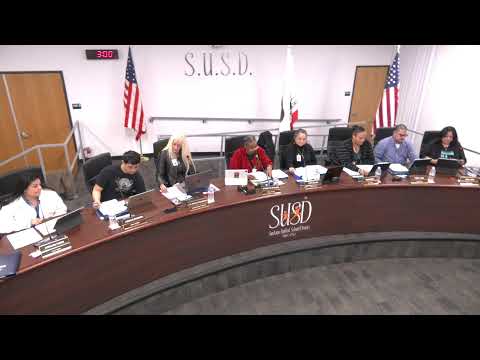
Stockton Unified presented key performance indicators on Feb. 11 showing expanded curricular access across AP, IB, career technical education and dual‑enrollment programs.
Presenters introduced the district’s broad course of study indicator tied to the California School Dashboard and outlined how flexible schedules (4x4, A/B block, AMP) and counselor engagement support access to advanced coursework. The district reported roughly 144 additional students taking AP courses from the prior year and an increase of about 165 students receiving the Seal of Biliteracy.
“We have significant growth in AP and dual‑enrollment,” a district presenter said, noting growth in most demographic subgroups and expanded partnerships with Delta College to offer concurrent enrollment courses at multiple sites.
Franklin High School’s International Baccalaureate program also showed marked expansion: presenters described IB English being instituted across ninth grade and reported a jump in IB participation at Franklin from roughly 15% to about 60% in the cohort discussed.
Trustees sought more detailed breakdowns. Vice President Sofia Colon asked for proportional data by subgroup (for example, what percentage of Hispanic students are enrolled in AP) so the board can better understand equity of access. District staff said they could provide proportions and additional term‑by‑term data at a follow‑up meeting.
The board praised the district’s expansion of AP, ethnic studies and dual‑enrollment while noting the work ahead to sustain gains and align new graduation requirements through 2029.