Get Full Government Meeting Transcripts, Videos, & Alerts Forever!
Get email alerts on the Education Math topic
No spam. Unsubscribe anytime.
Acting superintendent lays out five district goals and proposes Math 8 pathway to boost middle-school math
Summary
Acting Superintendent Robert Nixon presented five district goals for 2024–25 focusing on student achievement, curriculum review, DEI, communication and curriculum-writing processes and proposed a new Math 8 pathway at Columbia Middle School to provide an additional route to algebra without removing accelerated options.
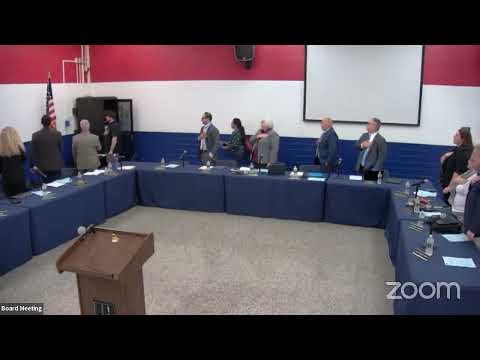
Acting Superintendent Robert Nixon presented five districtwide goals for 2024–25 and a package of next steps aimed at improving student outcomes and district communication. Nixon told the Berkeley Heights Board of Education the goals — focused on student achievement, curriculum, DEI metrics, communication and a revised curriculum-writing process — were developed with administrators and committees and will guide the district’s multiyear work.
Nixon said the district will analyze Grades 6–12 math sequencing and pilot a Math 8 course at Columbia Middle School for the 2025–26 school year as an additional pathway. "We're not looking to slow students down, hold students back, or remove opportunities from students," Nixon said. He explained the Math 8 pathway is intended to provide deeper concept work and give students more time to master foundational skills while preserving accelerated tracks for students who can handle geometry in eighth grade or algebra 1 in eighth grade.
The superintendent said the district’s K–5 math review will examine I-Ready and NJSLA sub-scores and curriculum subgroup categories such as numbers and operations, algebraic thinking, measurement and statistics, and geometry. "Across the board in every one of our four elementary schools, geometry was one of the lower-achieving measures," Nixon said, noting that the review will determine whether the issue stems from sequencing, timing, or assessment alignment.
Nixon also described a DEI plan that will pursue building-level work: K–2 intervention patterns (where early gender differences were observed), engagement strategies for grades 3–8, and better access to advanced coursework at the 9–12 level. He cited an internal finding that Black and Hispanic students represent about 10% of the district yet a smaller share of honors and AP rosters, and said the district will "figure out the why" and provide supports once data explain patterns.
On communication, Nixon proposed moving from reactive surveys to soliciting stakeholder input earlier in the budget and planning cycle and said the district will transition from SchoolMessenger to Thrillshare to improve website functionality and PowerSchool integration. He added that curriculum-writing procedures will be standardized across the district with clear operating procedures and a five-year view for curriculum development.
Board members asked for more specifics on timing, implementation, and measures of success. Several asked whether the Math 8 pathway would reduce opportunities for students to reach AP classes; Nixon said comparative district data show no drop-off in AP attainment for districts that use Math 8 pathways and that acceleration opportunities (summer coursework, double-ups in high school) would remain available. Board members requested periodic updates; Nixon said the district will provide progress reports and align any scheduling changes with collective-bargaining and staffing implications.
Next steps: the administration will continue to refine implementation plans, present timelines and staffing implications to committees, and provide the board and public with progress updates as the district prepares a detailed rollout and communication plan.