Get Full Government Meeting Transcripts, Videos, & Alerts Forever!
Get email alerts on the Transportation Infrastructure topic
No spam. Unsubscribe anytime.
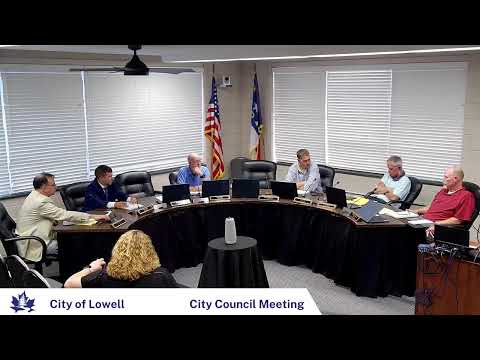
Lowell council debates $454,000 municipal share for I‑85 aesthetic "betterments"
Summary
Representatives from the MPO and NCDOT presented a package of aesthetic improvements for the I‑85 widening. Council members split over whether Lowell should pay its roughly $454,060 municipal share; the transcript records extended debate and an ambiguous vote result.
Randy Gates of the regional MPO briefed Lowell’s City Council on proposed aesthetic "betterments" for the I‑85 widening — including brick veneer on bridges, medallions and roundabout landscaping — and presented price alternatives for Exits 22 and 23, the Grove Street bridge and South Church Street work.
Gates said the full package totaled about $1,225,000; NCDOT would participate with roughly $831,530, leaving municipal participation for Lowell of about $454,060.26. She said the brick veneer and some landscaping are "one‑shot" items that cannot be retrofitted after the project is complete and described a 10‑year payment option that would spread the city’s share at about $45,406 per year.
NCDOT representative Michael Penny explained the project schedule and procurement approach. He said the design‑build contract is a fixed lump‑sum bid: "When they put their bid in and we accept it, that covers the entire project," and cautioned that while the fixed price limits subsequent line‑item changes, the department absorbs some long‑term escalation risks on its end. Penny described design and right‑of‑way timing tied to award in July and early construction work beginning in 2026 for the first segment.
Council members and residents pressed on maintenance and fiscal responsibility. One resident noted that the betterments would be paid with local money even though widening is federally and state funded, calling it "on the backs of the citizens of Lowell." Supporters argued the investment would create a unified regional corridor and could catalyze downtown economic development; one supporter said, "If $45,000 a year breaks this town, we have far more fundamental problems." Opponents warned of long‑term maintenance obligations for landscaping and brick repairs and questioned committing a significant portion of the city’s budget to a state road.
Councilor S2 moved to approve the second funding option (reported in the meeting packet as about $456,060.20); the motion was seconded and put to a voice vote. The transcript records disagreement and several members stating opposition; the meeting record contains inconsistent statements about the tally. The chair later said, "It passed 3 to 3 to 1," while other parts of the record describe a split outcome and individual members recorded as voting against the motion. The transcript does not contain a clear, consistent roll‑call showing each member’s recorded vote.
What happens next: Council members and staff discussed payment plans and partners; the presentation materials and cost alternatives remain before the council. Any formal municipal commitment would require a further, clearly recorded vote and an authorizing motion to accept the municipal agreement and payment schedule.
Sources: Presentation and Q&A with Randy Gates (MPO) and Michael Penny (NCDOT) to the Lowell City Council; cost figures and municipal participation amounts were presented during the public meeting.