Get Full Government Meeting Transcripts, Videos, & Alerts Forever!
Get email alerts on the Education Policy topic
No spam. Unsubscribe anytime.
Board committee urges AI task force; members debate ad‑hoc vs. standing approach
Summary
The policy committee recommended forming an ad‑hoc AI task force to study uses of artificial intelligence in classrooms and administration before advancing a first‑reading policy; several board members argued the issue is broad enough to warrant a standing committee and staff and curriculum input will be necessary.
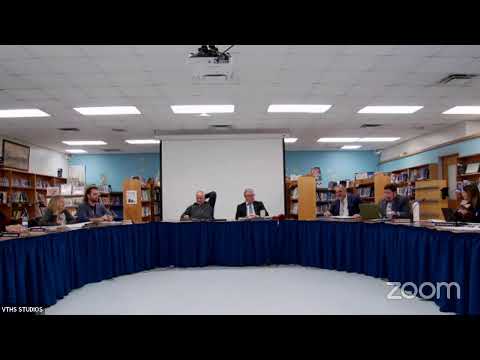
Board members spent substantial time Nov. 21 discussing how to address artificial intelligence in district classrooms and operations. The policy committee reported it had reviewed an AI policy draft but recommended convening an ad‑hoc task force first to gather stakeholder input before submitting a policy for formal adoption.
"We recommend that there's an ad hoc committee formed to review AI use in the district," the policy committee representative said, explaining the intent is to collect broad stakeholder views and to avoid rolling out a policy before the district is ready to implement it.
Several board members pushed back that AI is so pervasive that it may be better treated as a standing committee responsibility rather than an ad‑hoc task force. Members cited classroom plagiarism risks and fast‑moving industry developments as reasons to broaden participation beyond a single committee. "AI is such a rapidly changing environment," one member said, urging involvement from teachers, staff, administration, parents and students.
Discussion also covered operational uses of AI for administrative efficiency and the importance of involving technology staff. Curriculum committee members said staff will form an internal committee to pilot instructional uses and that grants may be available to support training.
Public commenters and board members urged caution and the development of clear parameters — both to prevent student plagiarism and to harness AI as an instructional tool. The board did not adopt a formal AI policy at the meeting but signaled intention to continue deliberations and to set up the recommended stakeholder group.