Lifetime Citizen Portal Access — AI Briefings, Alerts & Unlimited Follows
West Hollywood council approves permanent delivery‑robot program with fleet limits and $4 ad fee
Loading...
Summary
The City Council voted 4–1 to adopt a permanent regulatory framework for personal delivery devices (PDDs), setting fleet caps and approving a $4 per‑device daily advertising fee while directing enforcement safeguards and ADA protections.
The West Hollywood City Council voted to make the city’s personal delivery device program permanent, approving operational limits, enforcement mechanisms and a reduced advertising fee after months of a pilot program.
The motion approved by a 4–1 vote makes permanent the operating agreement framework that staff proposed to standardize how autonomous delivery devices operate in the city. Staff said data from the pilot shows more than 34,000 cumulative trips between January and June 2025 and average trip distances of roughly 0.6–0.7 miles, and recommended codified safeguards including geofencing, automated incident alerts, operator response windows and service‑level penalties.
"Overall the general program statistics coupled with the extensive spatial utilization of the pilot program demonstrate that PDDs have become a consistent delivery mode for users and for merchants," staff planner Paige Portwood said, noting staff’s recommendation grew out of pilot data and consultations with advisory boards.
Vice Mayor Heilman, who moved the amended staff recommendation, said the council must balance innovation with accessibility and enforcement. "I'm prepared to go ahead and move the staff recommendation with 2 changes, and that is that we return to the fleet numbers that currently exist and that the advertising amount is the $4 proposed by the companies," Heilman said during deliberations.
Operators and business groups urged approval, describing reduced emissions, more reliable short‑distance deliveries for small merchants and lower delivery costs for residents. Carl Hanson of Coco told the council the industry relies on modest advertising revenue to keep services affordable: "At $4 per bot, displaying advertising per day, we could make this work," he said. Serv Robotics’ government affairs manager emphasized local partnerships and completion rates, and company filings were offered as a source for broader financial context.
Council discussion focused on sidewalk access for people with disabilities, on‑street safety measures and how the city would enforce rules. Staff said both operators will feed device location and status data into the city’s MDS monitoring platform and that operators are contractually required to respond to incidents within an hour; penalties are capped in the agreement but termination remains available for repeated or severe failures.
The final council motion restored the prior operational fleet cap (as recommended by the Disabilities Advisory Board and staff) and accepted $4 per‑device per day for static advertising wraps if operators opt in; the council also directed that program revenues be reinvested into sidewalk improvements and accessibility work.
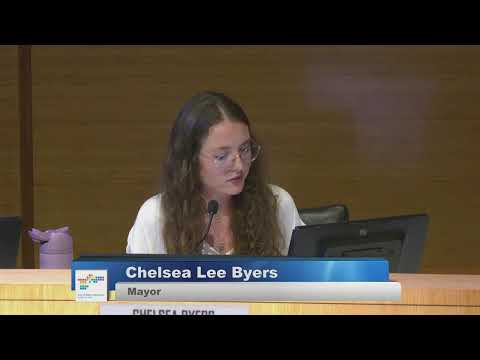
The vote passed 4–1, with Councilmember Meister casting the lone no vote; staff will finalize the operating agreement language and return contractual documents as required for program implementation.
The program was built from a pilot that began in 2020 and expanded with two operators (Serve and Coco) and will now proceed with the permanent regulatory framework and the monitoring, enforcement and community protections the council adopted.