Port of Everett official details waterfront redevelopment, warns tariffs and litigation are straining cargo volumes
Loading...
Summary
A Port of Everett representative briefed the board on port operations, waterfront redevelopment and economic ties to Boeing, and said tariffs and an ongoing warehouse pollution lawsuit have reduced cargo and revenue, constraining local capital projects.
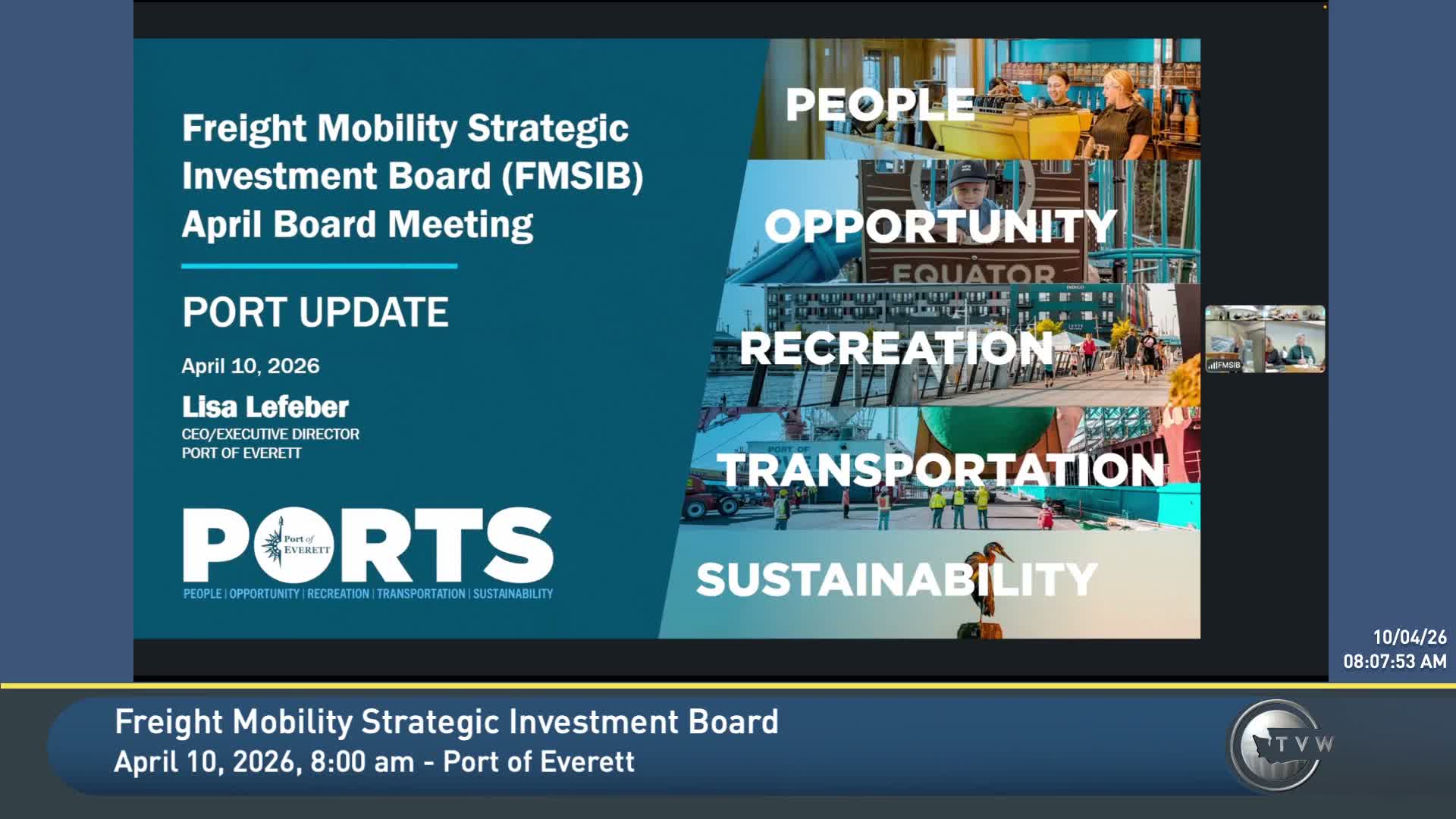
A representative of the Port of Everett told the Washington Patriot Mobility strategic investment board on April 10 that the port runs three lines of business—an international seaport, a growing real estate division and a public marine facility—and that recent shifts in trade policy and litigation are reducing cargo volumes and revenue.
The presenter described the Port’s role in supporting aerospace supply chains tied to Boeing and said the port’s job footprint and tax contributions are substantial. The briefing said cargo volumes spiked during COVID when shippers diverted traffic from Southern California ports, but that tariffs and changes in international trade flows have since depressed throughput. The presenter added that the port is engaged in a long-running litigation with a warehouse operator over historic pollution that is consuming staff time and resources.
Board members asked about local economic impacts and workforce ties; the Port representative highlighted waterfront redevelopment, including mixed‑use housing projects that are shovel‑ready pending an equity partner, and investments in rail capacity and dredging permits to support maritime access. The presentation also noted recent additions to waterfront amenities—new restaurants and event programming—intended to broaden public access and local commerce.
The Port representative framed those investments as part of a balanced approach to retain the port’s niche handling of high‑value oversized cargo and to diversify revenue. The board thanked the presenter and moved on to the next agenda items.
The presentation was given as an informational briefing; no formal board action on port matters was recorded at the meeting.