Get Full Government Meeting Transcripts, Videos, & Alerts Forever!
Get email alerts on the Municipal Insurance topic
No spam. Unsubscribe anytime.
WCIA deputy director warns Richland council of rising municipal liability costs
Summary
Robert Osco, deputy director of the Washington Cities Insurance Authority, told the Richland City Council on April 7 that rising jury awards and reinsurance costs are straining municipal insurance pools and urged councils to stay in their legislative lane to limit liability exposure.
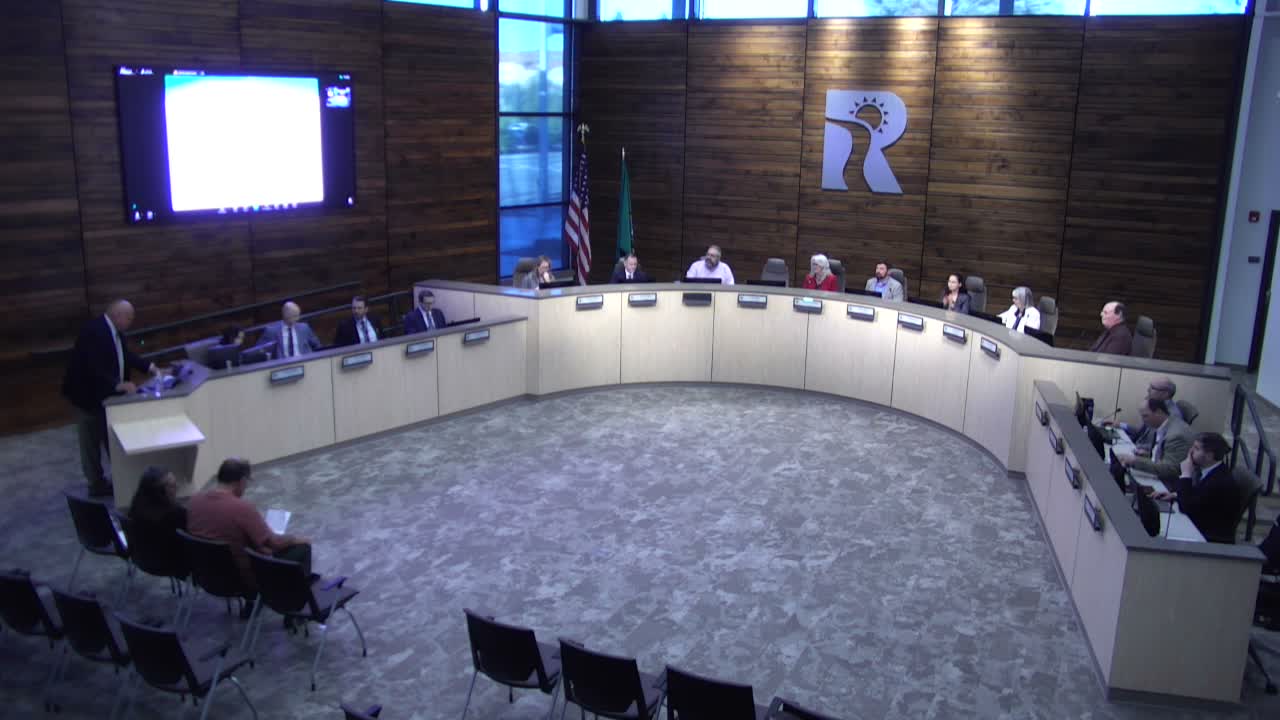
At a Richland City Council meeting on April 7, 2026, Robert Osco, deputy director of the Washington Cities Insurance Authority (WCIA), told council members that mounting jury awards and reinsurance price spikes are increasing costs for municipal insurance pools and could affect local budgets.
Osco, who presented an overview of WCIA’s role as an interlocal risk pool for cities, said WCIA currently provides $20 million in liability coverage to members and takes the first $5 million of each claim, with reinsurance purchased above that layer. “We only insure municipalities or municipal agencies,” he said, describing the pool as a membership‑owned vehicle that lets cities share risk and influence coverage terms.
He warned that reinsurance markets have become difficult: “In 10 years, my reinsurance premiums have increased over 700%,” Osco said, and noted that reinsurers have raised required attachment points, forcing WCIA to increase its self‑insured retention. He cited several large local awards in 2026 and said those verdicts make it harder to judge how much coverage is adequate.
Osco gave practical advice for elected officials to reduce exposure: stay in the legislative role on zoning and budgets rather than intervening in permit or personnel decisions; route permit‑level quasi‑judicial matters to a hearing examiner; defer technical judgments about traffic engineering to staff and experts; and report suspected personnel misconduct to HR or the city attorney rather than handling it personally.
He also described non‑insurance liabilities that can drive municipal costs, including breach‑of‑contract awards tied to development agreements. Using a Cle Elum arbitration as an example, he said some awards are not insurable because they stem from contract terms rather than torts.
On the property side, Osco said WCIA had seen some recent improvements and was hopeful for lower property premiums in 2027 if a quiet summer avoids catastrophic events; liability trends, however, remain upward. He urged council members to ask staff to commission engineering reviews before publicly labeling roads or intersections unsafe and to avoid conducting official city business on personal devices or social‑media pages because of Open Public Meetings Act and public‑forum risks.
Osco closed by encouraging questions and said WCIA evaluates settlement versus litigation on a case‑by‑case basis, balancing fiduciary obligations to the membership and the strength of legal defenses.
The WCIA presentation took place during a pre‑meeting session; the council then resumed its regular agenda at 7 p.m.