Get Full Government Meeting Transcripts, Videos, & Alerts Forever!
Get email alerts on the Historic Preservation topic
No spam. Unsubscribe anytime.
Los Altos council adopts historic‑preservation code and formal Mills Act program after public debate
Summary
The Los Altos City Council voted 4–0 (vice mayor recused) to move the city’s historic‑preservation rules into the zoning code and adopt a local Mills Act ordinance, following public comment from property owners and preservation advocates and council discussion on notices, appeals and contract terms.
Los Altos City Council on [date not specified] introduced and adopted, by title and with the first reading waived, three ordinances that relocate historic‑preservation rules into the zoning code and establish a local Mills Act program to formalize contracts with qualifying historic property owners.
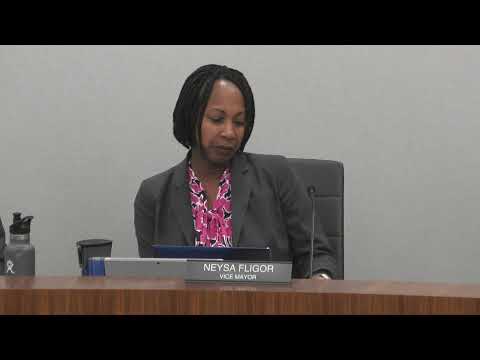
The council’s action — 4–0 with Vice Mayor Fliger recused — created a new Chapter 14.93 (historic preservation), added a Mills Act program chapter, and repealed the existing Title 12 historic‑preservation provisions. Council members also found the measures categorically exempt from CEQA under the exemption cited in the staff report (CEQA §15061(b)(3)).
City staff described the changes as mostly organizational and clarifying. Assistant City Manager Nick said the code updates would move the city’s historic‑preservation language from the building code into the zoning code (Title 14), clarify which bodies review designations and permits (historical commission advises; council takes final action) and set out procedures for Mills Act contracts. Staff reported Los Altos currently has 17 Mills Act contracts and summarized a typical range of property tax savings of 20–70% depending on assessor calculations.
During questions, council members sought concrete estimates of fiscal and staff impacts. The mayor said a back‑of‑the‑envelope calculation suggested the city would forgo roughly $81,000 in annual tax revenue under typical assumptions; staff responded that the precise impact varies by property and provided a 10‑year illustrative range for the current 17 contracts. Staff also estimated 50 hours of staff time per new Mills Act contract to prepare it for public hearing and said senior planning staff currently spend roughly 5–10% of an FTE on Mills Act work, with potential need for additional monitoring resources.
Public comment featured multiple current Mills Act property owners and preservation groups who praised the program’s preservation benefits and urged careful drafting. Speakers asked the council to reconsider proposed limits on notification and appeal (the draft uses a 300‑foot notification radius), to require clearer standards and guardrails for demolition on safety grounds, and to reconsider a new requirement that homeowners hire a historic‑preservation professional every 10 years (some owners urged the city to hire and coordinate that review to reduce owner costs).
In deliberations, council members largely affirmed the public value of preserving historic resources while agreeing the city should tighten administration and monitoring. Councilors reached agreement on several policy points: nomination of properties to the Historic Resource Inventory will be limited to the owner, the historical commission or council (owner‑initiated nominations should reflect all ownership interests), and current contracts in place are not being changed by these ordinances. There was debate over the statutory automatic annual 1‑year extension language in Mills Act contracts; some council members expressed concern about perpetual rolling contracts while others noted the rolling feature provides certainty to owners and follows state practice. One councilor asked staff to study the implications further as part of upcoming reviews.
The council adopted the ordinances with a motion to adopt by title only and waive the first reading; the motion passed with the recorded vote as announced in the meeting (4 yes; Vice Mayor Fliger recused). The council also approved the staff’s CEQA exemption finding.
Next steps: the ordinances will be incorporated into the municipal code; staff noted additional general‑plan and historic‑resource inventory work is forthcoming as part of the city’s general plan update.