Get Full Government Meeting Transcripts, Videos, & Alerts Forever!
Get email alerts on the Utilities Rates topic
No spam. Unsubscribe anytime.
Consultants tell Truth or Consequences commission that higher water and wastewater rates may be needed to cover debts, meet compliance
Summary
Consultants presented a four-year water and wastewater rate study recommending phased meter-based minimums and multi-year increases — including large wastewater hikes in some scenarios — to avoid drawing reserves or defaulting on debt; commissioners heard public concerns about impacts on low-income residents and implementation details.
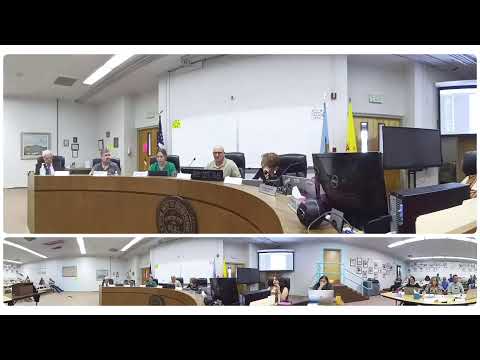
Truth or Consequences officials heard detailed findings Oct. 8 from consultants who say the city's water and wastewater utilities are likely to need multi-year rate increases and structural changes to rates if the city is to cover debt and fund aging infrastructure.
"Much of it comes with a high debt," Gary Henderson told the commission as he introduced the study, saying the commission set a process to reassess rates and that accepting the final report would close the consultants' contract and allow staff to schedule public hearings. Carrie Anderson of NewGen Strategies and Solutions explained the study approach, saying the water test-year expenses were about $1.9 million (adjusted to just over $2.0 million) versus roughly $1.8 million in revenues and that the wastewater net revenue requirement came in at about $1.4 million.
Dave Yountke, president of NewGen, walked commissioners through three rate scenarios: a status-quo path with a 3% annual CPI adjustment; a moderate plan (examples given: 3% residential/5% commercial) combined with a phased-in meter-equivalent minimum; and a larger plan (6% residential/8% commercial). On wastewater, the consultants modeled more aggressive options — 15% and 25% annual increases in early years — to create the revenue capacity to borrow for plant renovations and to meet compliance requirements, including recent, evolving treatment standards.
"If you do nothing, you're under recovering every year," Yountke said, showing bill comparisons using a 6,000-gallon benchmark (which he said reflected the state survey and typical usage). He recommended moving to the stronger scenario for wastewater to generate funds and position the city to take advantage of matching state grant programs. "The most critical is getting that first increase at the start of fiscal year 2027," he said.
Consultants urged two structural changes: phasing out the 2,000 gallons currently included in the minimum bill (to reduce implicit "free water") and implementing meter-equivalent minimums so larger meters pay higher minimum charges than small residential meters. Yountke said those changes, phased in over several years (the consultants modeled up to 10 years), materially improve the city's revenue position while spreading impacts.
Commissioners pressed consultants and staff on mechanics and timing. Questions included whether the city would implement increases by ordinance or as part of the budget process, how average usage was calculated, and how meter-size multipliers would be phased. Henderson said the city currently carries roughly $1 million in reserves for each utility and that the study's larger wastewater scenario was modelled to generate enough revenue to support borrowing (he cited a hypothetical $5 million loan) while also leveraging grant matches.
Residents and community members told the commission they were worried about affordability. Ron Dorek said Truth or Consequences and Sierra County are economically different from many New Mexico systems and asked why comparisons did not factor local poverty levels; he also raised a discrepancy between rates posted online and utility office materials and asked how wastewater volumetrics would be measured when there are no sewer meters. Deborah Clemente urged the city to address heavy-truck engine braking near her home and asked for an ordinance and signage. June Russett of Tree New Mexico said some residents have declined free trees because they fear higher water bills.
Mayor Raul Eschler and staff framed the study as a basis for public engagement and further action. "We have to be aggressive in going out and finding money," Eschler said, adding the city will continue pursuing grants and legislative relief to reduce local borrowing needs. Staff said accepting the consultants' report is the next procedural step that would allow the city to finalize the written report and schedule evening public hearings to present scenarios and gather community input before any rate changes are adopted in the budget process.
No rate ordinance was adopted at the Oct. 8 meeting. The commission approved routine consent items and adjourned briefly; staff will finalize the report, publish detailed schedules, and arrange public hearings so residents can review proposed scenarios and ask questions before commissioners consider any ordinance or resolution to set new rates.