Get Full Government Meeting Transcripts, Videos, & Alerts Forever!
Get email alerts on the Cemetery Operations topic
No spam. Unsubscribe anytime.
Greenland Board of Selectmen meeting addresses cemetery mapping errors, signage and volunteer headstone repairs
Summary
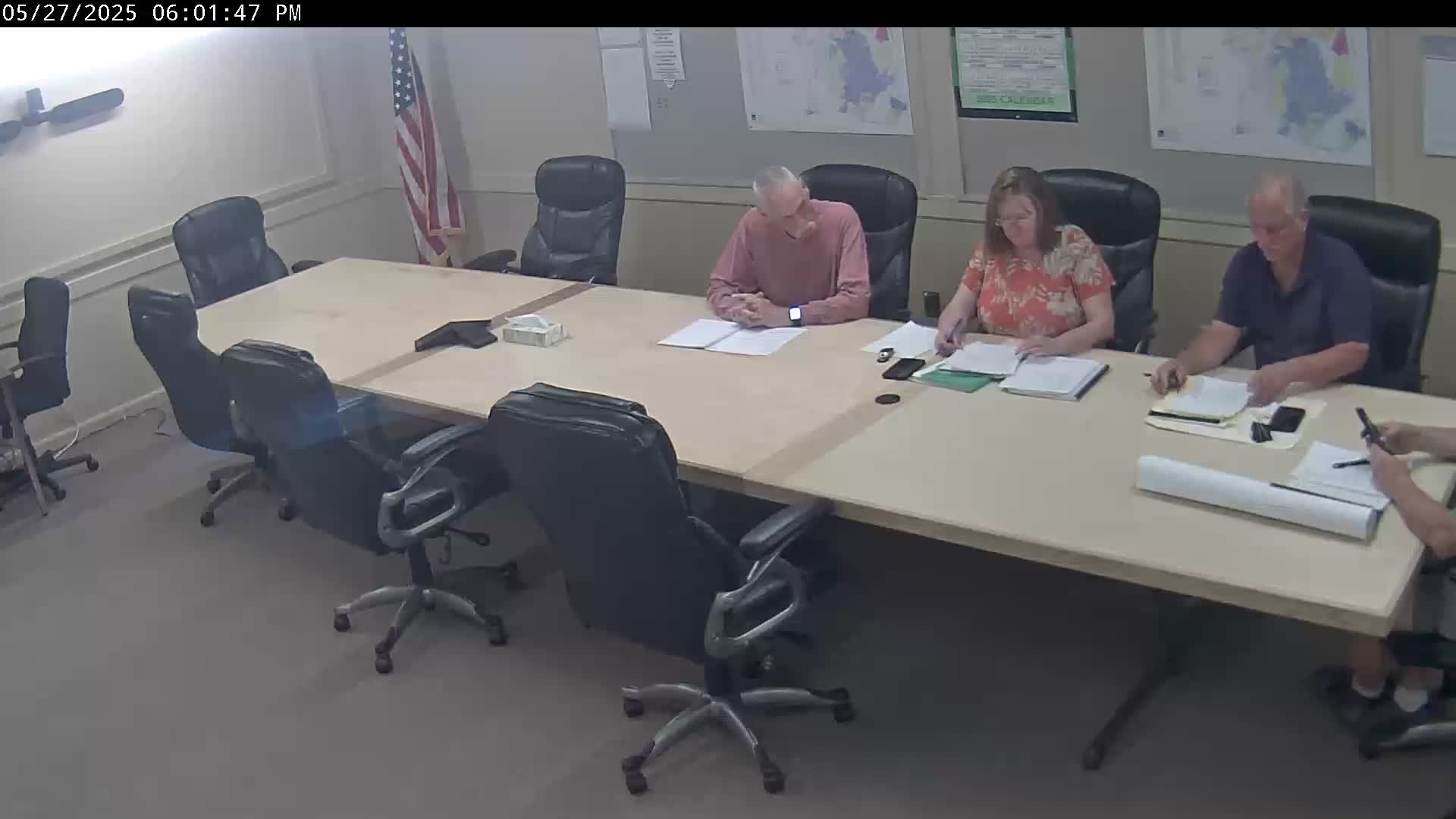
At a meeting associated with the Greenland Board of Selectmen, caretakers discussed a red‑tagged backflow valve in the school basement, relocation of a transfer‑station sign and stone, inaccurate cemetery mapping at Prospect Hill, notification procedures for funeral homes, and a volunteer repair day tentatively scheduled for July.
Members meeting in a local cemetery oversight session (materials reference the Greenland Board of Selectmen) reviewed operations and next steps for Prospect Hill and other local cemeteries, including mapping corrections, signage and volunteer stone repairs.
The meeting opened with a facilities update: S2 reported, “The water is turned on,” but added that the backflow assembly in the school basement had been red‑tagged after failing the annual test. “It didn't pass the backflow test,” S2 said, and noted the red tag did not specify which valve component failed. Participants agreed the town of Portsmouth performs testing and that the group should request the town report and confirm whether a licensed plumber is required for repair; S2 said rebuild kits exist and estimated a rebuild cost near $300 but observed replacement is sometimes more economical.
Signage and monument placement were next. S1 said the group found a large rock for a proposed cemetery marker and reported conversations with the town about moving the transfer‑station sign; S3 said the town asked them to “give it some thought” rather than refusing. S2 said local stone worker Andy Burse would be willing to evaluate engraving costs; S1 noted New Hampshire Monuments had done repairs elsewhere.
The group spent substantial time on records and mapping. S2 reported several burials—ashes and full plots—are recorded in the mapping system in the wrong place: “they're marked in the system in the wrong spot,” S2 said, describing misaligned columns and rows and multiple plots that do not match actual ground locations. S1 and S2 agreed to mark confirmed open plots with stamped aluminum stakes and to work section‑by‑section to remeasure, probe the ground, and correct the digital records so future searches match walking routes on site.
On administrative matters, S1 said she has begun drafting updated bylaws and a written description of the sexton's responsibilities, including permissible plantings (bylaw language cited a 14–16 inch planting zone in front of a stone and prohibitions on trees and large shrubs). S2 proposed sending a standard protocol letter to all local funeral homes requiring directors to call before any burial; participants asked S1 to draft the letter for review.
Participants also discussed the privately sited Bracket Cemetery, which S1 said is on private land and therefore outside the group’s jurisdiction; she reported forwarding documentation about needed repairs to the trustees of the perpetual care trust and noted the fund balance for that cemetery is roughly $8,000. Committee members questioned whether the requested certified stone repairs could be paid from that balance.
Volunteers and supplies: S3 proposed recruiting volunteers for smaller headstone repairs and a test patch of lawn restoration; the group discussed materials inventory (shovels, buckets, pack gravel) and agreed to assemble supplies first. S2 estimated crushed gravel at about $35 per yard and said some usable material had already been scraped into a corner on site. The participants tentatively discussed a volunteer cleanup/repair date in July (options discussed included July 13) and agreed to finalize a date after confirming supplies and staff availability.
Next steps and procedural directions from the meeting included: request the town/P ortsmouth backflow test report; S1 to draft updated bylaws and a sexton job description; draft and circulate a notification letter to local funeral homes; mark and measure a few plots to begin correcting the mapping system; inventory supplies and order cleaning materials if needed; and organize a volunteer headstone‑repair day. S3 moved to adjourn near the end of the session and the meeting closed shortly afterward.
The group did not take a formal recorded vote on policy changes; actions recorded were procedural directions and scheduling decisions. The trustees of the trust fund must authorize any expenditure for the privately sited Bracket Cemetery, and participants said they would await the trustees’ response before committing trust funds to repairs.
Ending: The caretakers left with assigned follow‑ups on mapping, bylaws, communication with funeral homes and volunteer scheduling; a motion to adjourn closed the meeting.