Lifetime Citizen Portal Access — AI Briefings, Alerts & Unlimited Follows
Delavan–Darien extraterritorial zoning committee outlines process, hears landowner concerns
Loading...
Summary
At a public information meeting, the Delavan–Darien extraterritorial zoning committee explained how the ETZ process works, confirmed an 18‑month freeze on zoning changes in the area, and collected property‑owner requests and questions about taxes, wells, and conditional uses such as agritourism and data centers. Staff said next steps include a May work session and a draft‑map public hearing in June or July.
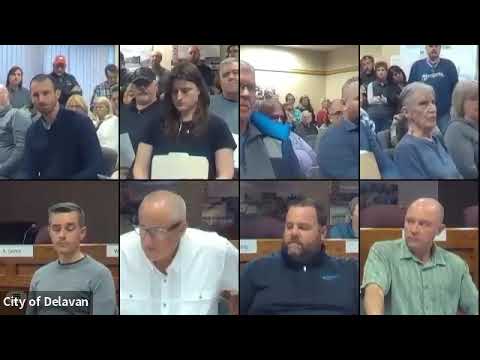
The Town of Darien and City of Delavan joint extraterritorial zoning committee held a public information meeting to explain the ETC (extraterritorial zoning) process and gather property‑owner input.
Kevin Armstrong, chair of the city planning commission, opened the meeting by describing the statutory purpose of an ETC: to allow a city and adjacent town to jointly manage border zoning to protect prime farmland and avoid incompatible uses. "This is not a done deal. What this is is a process," Armstrong said, adding that the ETC would not annex property or change municipal boundaries and that zoning changes in the ETZ area are temporarily frozen for 18 months while the committee develops a proposed map and regulations.
City administrator Nick Griffin gave a staff update on recent permit and zoning activity in the ETZ area, saying the city has received requests such as a detached building on County Avenue and has compared county permit fees and review times. Griffin said staff aim to provide an initial zoning check for simple building requests within three business days and noted that properties enrolled in Walworth County farmland‑preservation programs remain eligible for the 2026 reimbursement period; 2027 eligibility will depend on when a final ETZ ordinance is forwarded to the city and submitted to the Wisconsin DATCP for review.
Planner Jackie Mishan reviewed the posted Walworth County zoning map that covers the ETZ area. She described large swaths designated for prime agriculture, some R‑1 residential frontage along Highway 11, small pockets of M‑1/M‑3 industrial zoning and B‑1 commercial parcels, and conservation districts around creek and floodplain areas.
The meeting included a property‑owner workshop. The committee invited owners to identify parcels they want the committee to consider for zoning changes and asked any owners not present to submit written comments. Tom Owen of Owen Farms told the committee his operation hosts agritourism activities — "We have sunflowers and pumpkins, and people are coming out to the farm and, having some gatherings" — and asked whether the committee could consider broader or different conditional‑use allowances to accommodate events and similar uses. Staff replied that owners may submit proposals and that planning staff would work with them to draft options for committee consideration.
Several residents asked whether ETZ action would change taxes, bring city water or sewer, or otherwise alter property rights. A resident, Jerry Yockey, asked specifically whether a large project such as a data center could affect private wells. Committee members and staff said the ETZ would govern zoning only; it does not automatically change municipal boundaries, does not change property tax jurisdiction, and city water or sewer would not be extended except through a separate annexation process requested by property owners. Staff also said the city is considering an ordinance approach that would limit data‑center development in the jurisdiction.
Staff outlined next steps: a work session in May to compile owner comments and draft map options, publication of a draft map in June, a public hearing in June or July, and a committee recommendation followed by final city action. The committee noted that any recommendation requires at least four affirmative votes from the six‑member panel (three city, three town). The meeting concluded with a voice vote to approve the previous meeting’s minutes as amended.
What happens next: property owners who want proposed changes should submit written requests or contact staff ahead of the May work session so planning staff can compile those requests into the draft map process for committee review.