Get Full Government Meeting Transcripts, Videos, & Alerts Forever!
Get email alerts on the Housing topic
No spam. Unsubscribe anytime.
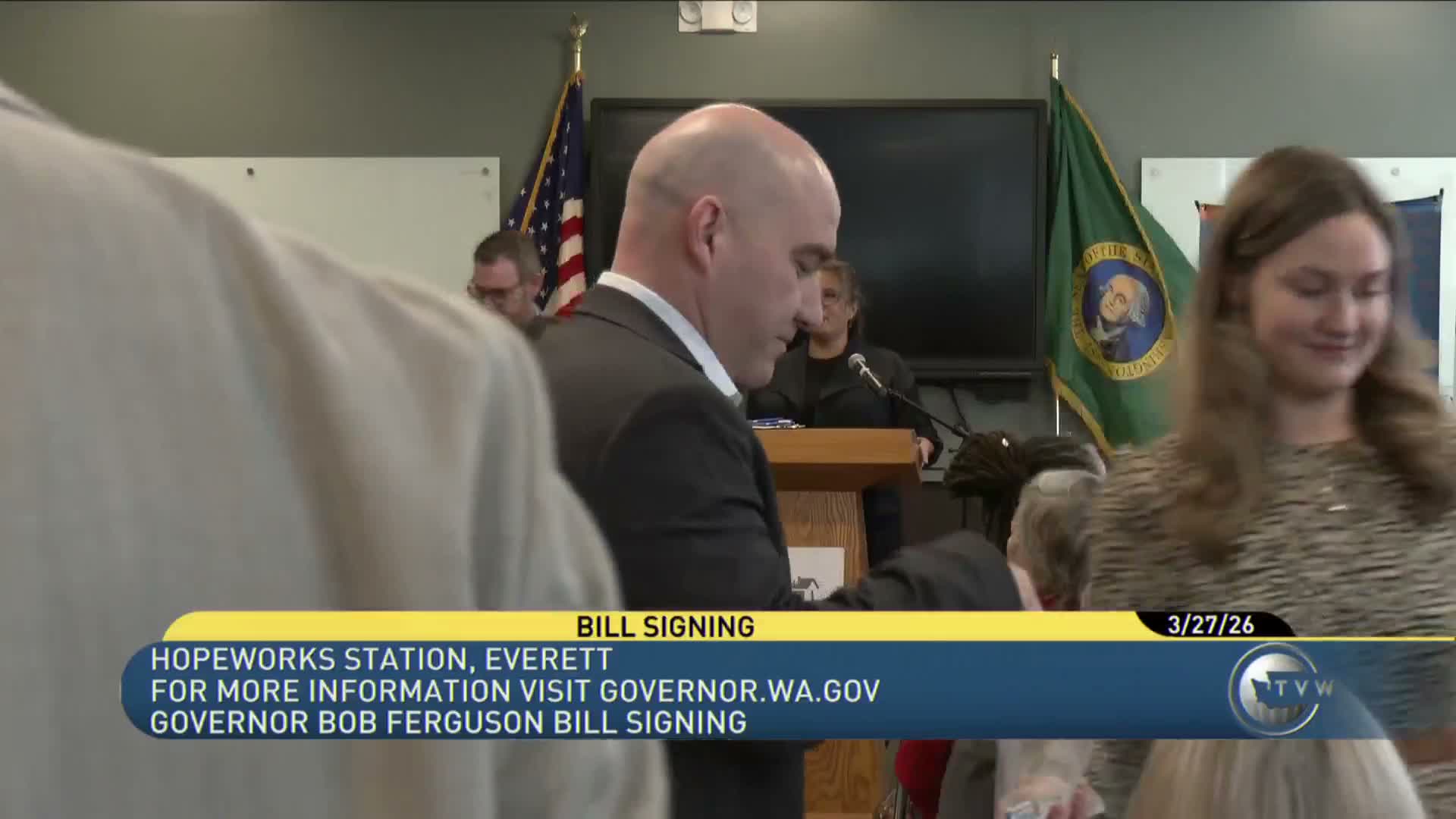
Governor signs package of housing bills at Everett HopeWorks Station
Summary
At HopeWorks Station in Everett, the governor signed a package of housing measures on issues from funding and land banking to ADUs, permit timelines and flood-risk disclosure, saying the bills will help expand affordable and supportive housing while acknowledging more work remains.
The governor signed a bundle of housing bills at Housing Hope’s HopeWorks Station in Everett, joining lawmakers, local leaders and advocates to mark measures aimed at expanding affordable housing, streamlining permitting and strengthening tenant protections.
The ceremony on site at the facility — which includes 65 deeply affordable units, 57 of them designated for households exiting homelessness — featured remarks from Kat Opinah, CEO of Housing Hope; Lieutenant Governor Denny Heck; and State Senator Emily Alvarado, among others. “It’s not about just signing bills. It’s about opening doors,” the governor said, framing the package as steps to make it easier and faster to build and preserve homes.
The bills singled out at the ceremony include: - Senate Bill 6027: an affordable housing funding measure that gives local governments more flexibility to use housing tax revenues for operations, maintenance and rehabilitation and clarifies eligible uses for permanent supportive housing contractors in the Department of Commerce. - House Bill 1345: authorizes counties in rural communities to allow detached accessory dwelling units (ADUs) and includes standards for ADU water use. - House Bill 2266: sets statewide permitting standards to treat permanent supportive, transitional and emergency “step” housing like other residential housing to speed construction. - House Bill 1974: expands local land banking authority to reduce the time it takes to secure land for housing development and support alternative homeownership models such as community land trusts and shared-equity approaches. - A bill to require landlords to disclose flood risk to tenants (described in remarks as Senate Bill 6237 alongside a House bill reference): presented as a transparency measure after recent flooding that affects renter decisions on flood insurance and housing choice. - House Bill 2418: amends the Local Project Review Act to create permit review timelines for several government entities to reduce permitting delays. - Senate Bill 6026: creates residential development zones to allow housing on land zoned commercial, lifting some ground-floor commercial requirements to facilitate conversions.
Kat Opinah, Housing Hope’s CEO, said the site “is a true testament to the power of public and private partnerships and innovation in affordable housing,” noting the building’s job-training programs and sustainability features. Lieutenant Governor Denny Heck called some measures “very hard to get passed” and highlighted the permanent supportive housing bill as a moral and practical step. Senator Emily Alvarado, the prime sponsor referenced for several measures, said the commercial-to-residential bill “is about making it easier to build the housing that our communities need.”
Officials stressed that the bills are pieces of a broader strategy rather than a complete solution. The governor cited a goal of building 1,000,000 new housing units over the next 20 years as an objective to guide sustained action; he also acknowledged local concerns and said the administration would continue work with cities and partners. Photo opportunities and brief remarks followed each signing, and officials made themselves available for questions after the ceremony.
Details noted at the event: HopeWorks Station includes 65 affordable units (57 designated for residents exiting homelessness); several bills amend permitting or funding rules rather than immediately creating new state spending lines; specific funding sources and implementation timelines were not specified at the ceremony. The governor and other officials said further work and implementation steps will follow in state agencies and with local governments.