Commerce outlines a "housing accelerator" framework with reports due to inform the 2026 and 2027 legislative work
Loading...
Summary
Dave Anderson of the Washington State Department of Commerce told the task force the housing accelerator is a budget proviso to identify production barriers, evaluate cost drivers, consult stakeholders and propose actions; a preliminary report will be submitted for the 2026 legislative session and a final report is due June 30, 2027.
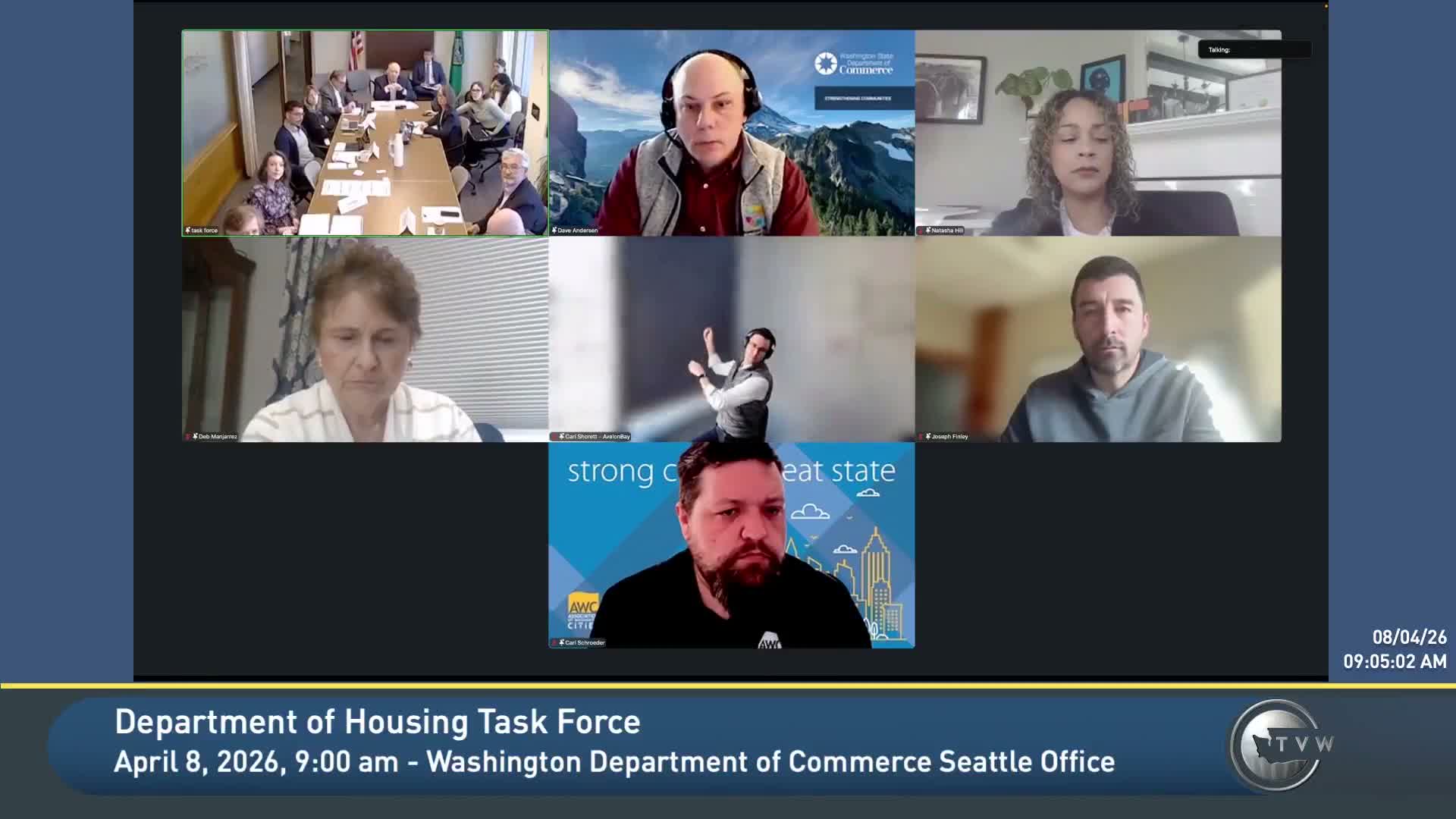
Dave Anderson, managing director of the Growth Management Program at the Washington State Department of Commerce, briefed the task force on a new "housing accelerator" proviso funded in the state operating budget.
Anderson said the accelerator is intended to "identify barriers to housing production, evaluate what drives the cost of housing, look for ways to accelerate housing production" and to increase the total number of units built. He told members the proviso requires consultation with local governments, other state agencies and affected interest groups. A preliminary status report is due in October for consideration in the 2026 legislative session, and a final report with recommendations is due on 2027-06-30.
Anderson tied the accelerator’s work to Executive Order 25-02 and to previously completed analyses (including a 2021 housing-cost study). He said the Commerce team will "stack" and evaluate more than 100 submissions from state agencies—everything from surplus property inventories to program proposals—to identify feasible policy and operational changes.
Members raised timing and naming questions. One participant cautioned that a prior legislative item with a similar name (a revolving loan fund) could cause confusion; Anderson and members agreed to clarify naming and scope in materials. Commerce staff also noted that agency-request legislation processes will proceed on a separate timeline and that some decisions about what Commerce proposes may need to be taken well before the accelerator's October preliminary report.
Commerce identified a project lead for the accelerator (Anne Bridal) and said the agency will keep the task force informed of how the accelerator's work intersects with the task force’s recommendations.