Get AI Briefings, Transcripts & Alerts on Local & National Government Meetings — Forever.
Council delays vote on tougher tall-grass, nuisance-abatement ordinance after heated debate over costs for residents
Loading...
Summary
Council members and residents debated an amended nuisance ordinance that would authorize abatement work, liens and criminal penalties and charge $150 per hour per crew for city abatement. Several members said the draft risked burdening low-income residents; the council agreed to postpone final action to clarify scope and fees.
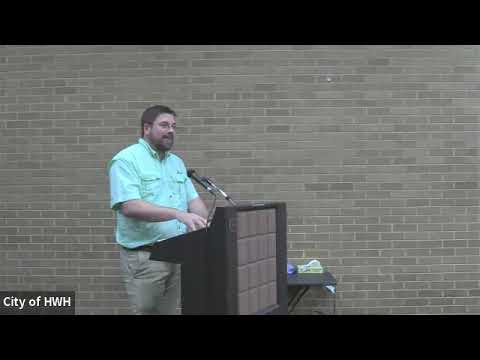
Council members moved to postpone final action on a proposed amendment to the city's nuisance ordinance after an hour of debate about enforcement, cost and equity.
The city attorney read the amended language that would add a seven-day cure notice, authorize the city to abate nuisances and assess the property for costs, and permit civil and criminal remedies. "Upon a determination of violation ... the city shall provide written notice ... advising such condition must be corrected within 7 days," the attorney said during the reading of the draft ordinance. The text also directs that abatement costs be assessed as a lien and describes a $150-per-hour charge "per crew" for abatement work, with proceeds routed first to reimburse the general fund and then to a designated code enforcement account.
Supporters said stronger enforcement is needed to address widespread tall grass, debris and chronic dumping. "We have to enforce what's already on the books," the mayor said, calling the change a deterrent to blight. Staff said clearer procedures and stronger documentation by code enforcement officers are intended to make prosecutions and lien collections workable.
But several councilmembers warned the measure, as drafted, could unduly pressure low-income residents and lead to unfair outcomes. One councilmember said, "I'm opposed to putting more pressure on poor people in this community," and another urged the body to specify whether contractor-generated debris or items placed at the curb would be treated as violations before fines and abatement proceed.
Councilmembers and the attorney discussed implementation mechanics: who documents time and labor, how the city coordinates street and sanitation crews with code enforcement, and whether the city should instead develop a payment-plan ordinance for residents who fall behind on utility or municipal fees.
After members requested clearer language on (1) which types of curbside materials the city will remove, (2) whether contractors can be held responsible for debris they leave on the right of way, and (3) how funds collected would be allocated (the draft proposed $50 to street and sanitation and $100 to code enforcement from a $150 hourly rate), the chair concluded there was consensus to defer the ordinance for further work.
The council asked staff to return with revised ordinance language and to schedule a workshop or future meeting focused on the scope of enforcement and procedures for payment plans and contractor responsibility. No final vote was taken.
The ordinance will return for further consideration after staff and the city attorney incorporate clarifications and outreach plans.