Get Full Government Meeting Transcripts, Videos, & Alerts Forever!
Get email alerts on the Procurement topic
No spam. Unsubscribe anytime.
New Canaan audit panel urges unified purchasing rules, tighter vendor controls and training
Summary
At a March 23 Payment Audit Subcommittee meeting, town finance staff outlined audit recommendations to harmonize purchasing policies, tighten credit‑card and vendor‑change controls, pilot a contract‑management module and require targeted staff training; staff will return with itemized timelines and a checklist.
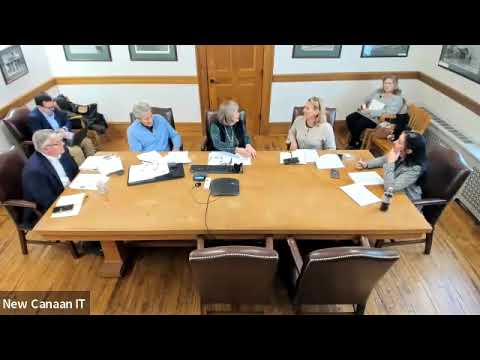
NEW CANAAN, Conn. — The Payment Audit Subcommittee on March 23 reviewed a slate of audit findings and agreed the town needs a single, comprehensive purchasing policy, stronger vendor controls and mandatory training for staff.
The meeting opened with the chair saying the subcommittee had full attendance and introducing that Anne Karl Ernst was present as the town’s chief financial officer. Finance staff (identified in the transcript as S3) summarized the audit’s main points and proposed next steps: adopt a harmonized purchasing policy drawn from templates other Connecticut towns have used, tighten controls on blanket purchase orders and shared credit cards, centralize contracts in a contract‑management module, and formalize vendor setup and emergency purchase processes.
“There's conflicting language in our current…based on what we had as a chart and what we have as a table,” the finance staff said, describing the audit finding on misaligned purchasing rules. The staff added: “We do need a comprehensive policy,” and said they had already collected model policies from four or five towns to adapt for New Canaan.
Why it matters: Committee members said inconsistent policies can let cumulative spending with a single vendor bypass competitive bidding, create gaps in who may change vendor banking details and leave the town exposed to payment fraud. Finance staff noted recent work to reduce paper workflows and to require departmental sign‑offs on purchase orders and invoices, but said several controls remain undocumented and should be formalized in revised policy language.
Key recommendations discussed included: - Replace or narrow blanket purchase orders to reduce uncapped, cumulative spend that can push totals over bid thresholds; - Adopt a contract‑management module (the town is piloting a module referred to in discussion as TCM) to capture contract terms, expiry dates and automated retainage (finance staff noted retainage around 10% on large contracts as an example); - Standardize an emergency‑purchase form to capture justification and backup documentation for after‑the‑fact board review; - Keep shared credit cards in finance and require staff to sign them out with receipts attached to reduce late or missing documentation; and - Strengthen vendor‑change controls (independent phone verification, documentation) and banking safeguards (reverse‑ACH blockers, IP whitelists) to limit fraud.
On vendor fraud and cybersecurity, finance staff recounted a recent, high‑loss example from another Connecticut town: “one town was over $2,000,000, and it ended up somewhere in China,” the staff said, as justification for more stringent verification of vendor‑bank changes. The staff also reported that under the town’s current shared‑card approach the finance office had experienced “only one fraud” in the past year‑and‑a‑half and that the shared‑card process had materially reduced missing receipts and late reconciliation.
Committee members pressed on operational detail and timing: who will review the tailored policy, whether an outside auditor should sign off, and how the town will monitor user access and approval rights in Munis (the town’s financial system). Finance staff said they will return with itemized timelines and a checklist tied to each audit recommendation for the subcommittee and the full committee to track progress.
“Now we just need you to come back and say, okay. Here's my timetable of when these things will be done,” a committee member said, requesting a by‑item timeframe the subcommittee can monitor.
The meeting closed after members agreed to the next steps and the chair called for a motion; the motion was seconded and the committee voted in favor (no roll‑call tally was recorded in the transcript).
What’s next: Finance staff will present a timetable and a checklist of changes (policy drafts, planned trainings, pilot results from the contract module and vendor‑cleanup steps) at an upcoming committee meeting so members can track implementation.