Get Full Government Meeting Transcripts, Videos, & Alerts Forever!
Get email alerts on the Community Survey topic
No spam. Unsubscribe anytime.
Auburn planning committee reviews community survey, vows broader outreach on affordability and housing
Summary
The committee heard results from a public engagement campaign that produced 541 full survey responses and more than 1,200 total inputs; members agreed to target underrepresented residents for follow-up and to press housing and transportation strategies into the draft comprehensive plan.
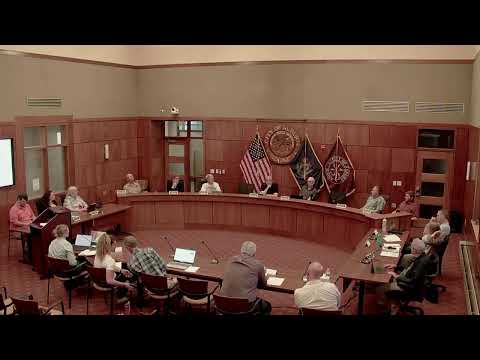
The Auburn Comprehensive Planning Committee on July 22 reviewed findings from the project’s public engagement and directed staff to deepen outreach to underrepresented residents while the team finalizes a vision statement.
The consultant reported “over 1,200 inputs into the process” across the website, surveys, focus groups and an open house, and said the team received 541 completed surveys, 478 of which were from full-time residents. The survey’s largest respondent age bracket was 60–69, and income responses skewed higher than Auburn’s median household income of about $66,000.
“This suggests the engagement so far is reaching an older, higher-income slice of the city,” consultant Jeff Hyraman said during the meeting, and he urged members to treat the projections and survey results as a point of departure rather than a fixed outcome. Chair John Cleveland emphasized accessibility at the start: “Everything you say is important and we wanna make sure to hear it,” he said, asking members to speak up for better acoustics and remote reach.
Committee members identified three crosscutting priorities from the survey: affordability (identified most often as an item that would improve quality of life), walkability and transportation connectivity, and more diverse housing options including smaller units and senior housing. Ally, the project consultant, said open-ended survey responses and focus-group tags pointed to those same themes.
Multiple members flagged participation gaps. “We’re getting the upper end of the demographic curve,” said Jeff Hyraman, noting turnout skew. Members proposed targeted tactics to correct that imbalance: “meeting-in-a-box” sessions to be deployed by local organizations, listening sessions at the drop-in center, tabling at community events (including an upcoming Powell Backpack Drive) and a youth forum organized with summer interns.
Becky Conrad read a verbatim comment that underscored the engagement challenge: “Auburn is an affordable place to live, which is why we moved here. However, it is purely just a place where we live and not a place where we are part of a community,” she said, urging plan language that addresses both affordability and civic life.
Staff said the inventory and analysis documents — including responses from subcommittees and a track-changes copy — will be consolidated into a Version 3 package and posted online by the end of July so the public can review them before the August visioning workshop. Phil Kroll told the committee the draft housing study should be ready in about two to three weeks and that staff are working to fold that analysis into the ongoing planning work.
The committee scheduled a workshop for August to draft a vision statement that will guide the plan’s goals, policies and future land-use map. Staff also committed to asking a sharper follow-up question at the next open house and online materials: “What does affordability mean to you?”
The committee approved the minutes from its June 17 meeting and moved on to the rest of the agenda. The next meeting is set for August at the same location, when members will begin drafting the vision statement and planning outreach to underrepresented groups.