Get Full Government Meeting Transcripts, Videos, & Alerts Forever!
Get email alerts on the Utilities topic
No spam. Unsubscribe anytime.
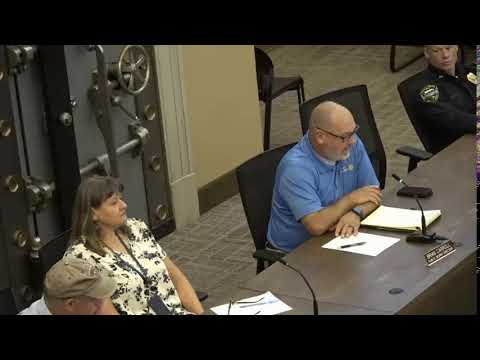
Keokuk council approves second reading of sewer-rate ordinance to shift debt from property taxes
Summary
The Keokuk City Council voted unanimously on Sept. 18 to approve the second reading of a sewer-rate ordinance that schedules a 3–7% initial increase, a 3% annual residential increase thereafter and a 10% annual industrial increase; city leaders say the changes will move debt-service costs off the property-tax levy.
The Keokuk City Council voted unanimously Sept. 18 to approve the second reading of an ordinance amending city code section 13.08.0.06 to change Class 2 sewer rates.
Council chair (speaker 4) said the measure "will implement 3 to 7% rate increases followed by an annual 3% rate increase with rate reviews to occur every 2 years for residential customers," and that "large industrial customers have been and will continue to be subject to an annual 10 rate increase." The chair said the increases are intended to shift debt-service payments from the property tax debt-service levy to sewer revenue and reduce the property tax levy by about $4.50 per $1,000 valuation, from roughly $7.50 to about $3 per $1,000.
Finance committee members and staff recommended the change, citing inflation and the need to cover debt service. The council conducted a roll-call vote; the clerk recorded votes from Crenshaw, Walker, Mullen, Hackley, Dade, Andrews Tillman, Bryant and Greenwald as "aye," and the chair announced the measure carried.
The council asked for, but did not receive, a motion to waive the third reading of the ordinance, so the third-reading waiver was not granted at the meeting. The second-reading approval keeps the ordinance moving through the council process; the transcript does not include a final-adoption ordinance number or an effective date.
Background: the chair said the adjustment responds to rising annual costs and to an intention to reduce reliance on the property-tax debt-service levy for sewer-related debt. The ordinance calls for biennial rate reviews for residential customers; the transcript does not specify the schedule for industrial reviews beyond the stated annual increase.
What happens next: because the council approved the second reading and did not waive the third reading at this meeting, the ordinance remains subject to the council's further procedural steps before final adoption and any effective date is "not specified" in the record.