Get Full Government Meeting Transcripts, Videos, & Alerts Forever!
Get email alerts on the Municipal Budget topic
No spam. Unsubscribe anytime.
Fletcher council reviews budget outlook as sales-tax receipts lag and CIP priorities shift
Summary
Council discussed revenue projections, a small sales‑tax shortfall, a healthy fund balance, and options to reallocate CIP funds—including using reserves for storm-damaged park repairs—while flagging a pending county decision on fire-inspection fees that could add $40,000–$60,000 to town costs.
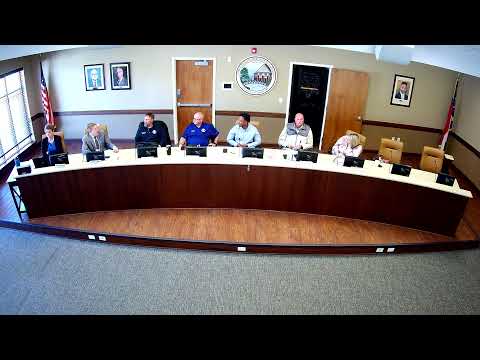
Fletcher council members met for a budget workshop that reviewed department spending plans and revenue projections for the coming fiscal year. Staff said property-tax estimates remain near prior projections, but sales‑tax receipts are running below budget through the first half of the year, creating a modest shortfall that officials said they are monitoring.
Finance staff summarized the town’s revenue picture and capital plan. Property valuations used for the town’s projections were about $1.875 billion; historically, billed property‑tax levies have come in higher than budgeted by roughly $100,000–$126,000, which provides some cushion. Utility sales tax and interest on investments are both tracking above budget so far, but sales tax — which funds roughly a quarter of general‑fund revenue — was about $40,000 (3.3%) below the six‑month projection.
Manager/finance staff said the town’s unassigned fund balance finished the prior year at about 65.5% of policy targets (policy range 45%–65%). That position gives the council flexibility to direct one‑time funds to capital repairs, such as storm‑damaged park facilities that might not be fully reimbursed by FEMA.
The council reviewed the five‑year capital improvement plan (CIP). Staff reported that the current 7¢ allocation of the property‑tax levy produces roughly $1.3 million, of which a portion is earmarked for debt service and the remainder for cash‑funded projects including police vehicle rotation and greenway extensions. With current estimates, staff said there is a modest CIP surplus that could be used toward park repairs or other one‑time needs without immediately raising the tax rate.
A pending county proposal could require municipalities to pay the county for fire‑inspection services; staff said preliminary estimates put that potential new expense between $40,000 and $60,000. The council asked staff to seek clarity from the county and prepare options, including whether the town could resume charging for inspections or ask the fire department to deliver inspections locally.
Next steps: staff will update revenue and expense estimates in April and present a recommended budget to the council in May. The council discussed using reserves prudently to cover storm‑related costs and agreed to revisit CIP allocations after final revenue numbers are available.