State education leaders urge favorable report on Compass Act to refocus school accountability on growth
Loading...
Summary
Supporters told the Education, Energy, and the Environment Committee that House Bill 15-82 (the Compass Act) would redesign Maryland's school-reporting system to emphasize student growth and clearer outcome measures rather than indicators that strongly correlate with student poverty.
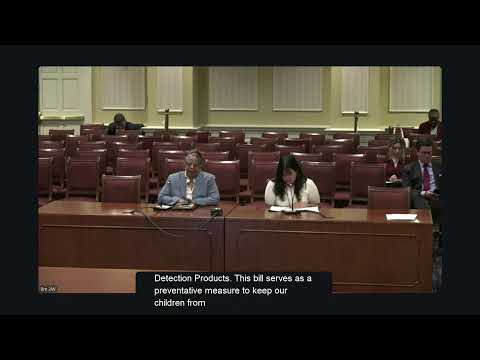
Chair Feldman opened the Triple E Committee hearing on House Bill 15-82, known as the Compass Act, inviting state education leaders to explain the bill.
Dr. Josh Michael, president of the Maryland State Board of Education, said HB1582 grew from the state's national search for a superintendent and subsequent stakeholder work: "House bill 15 82 is the result of that work," he said, adding the bill is intended to align the accountability system with the Blueprint for Maryland's Future and to place greater emphasis on student growth.
State Superintendent Carrie Wright told the committee the bill provides statutory flexibility to redesign the Maryland School Report Card so proficiency does not overshadow other measures of school performance: "We do not want to penalize schools serving high concentrations of students in poverty, and we want to ensure all measures are the ones schools can meaningfully influence," she said, asking the committee for a favorable report.
Ike Leggett, who described the report card as the state's "compass," told senators the proposed changes aim to make data more understandable and actionable for families and districts. Paul Lemley of the Maryland State Education Association said the bill grew from collaboration and singled out staffing indicators—such as teacher retention and conditional certification—as potential additions to the accountability framework.
During questioning, Senator Carrozza pressed witnesses for concrete examples and whether a side-by-side comparison of the old and proposed measures exists; witnesses replied that the bill authorizes the State Board and MSDE to design a new accountability "checklist" that will continue to include assessment results while elevating growth and other indicators that better differentiate school performance. Witnesses said the new model would produce school- and district-level scores and that many of the specifics will be developed once the statutory constraints are amended.
The committee concluded the bill hearing after questions. No formal vote was recorded during the hearing.
The Compass Act remains a proposal to change how Maryland measures school performance; officials said it preserves proficiency reporting while placing new weight on student growth and other indicators the State Board will identify if the bill is enacted.