Get Full Government Meeting Transcripts, Videos, & Alerts Forever!
Get email alerts on the Budget And Taxes topic
No spam. Unsubscribe anytime.
Giles County commission debates vehicle (wheel) tax, rescinds prior referendum referral amid procedural fight
Summary
The Giles County Commission spent more than two hours debating a proposed countywide wheel (vehicle) tax, its timing and whether citizens should vote. Commissioners rescinded a prior referral to a referendum and rejected a motion to send the new wheel-tax resolution back to committee; final action on adopting the tax requires further procedural steps and may need a two-thirds vote.
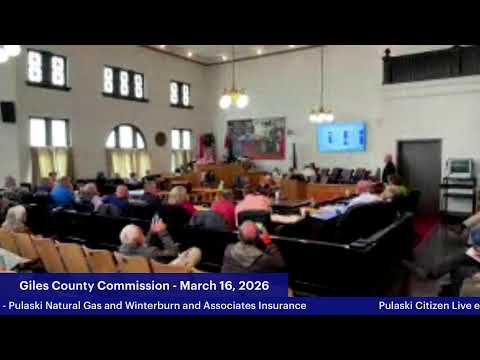
The Giles County Commission engaged in a lengthy debate over a proposed countywide vehicle, or “wheel,” tax on March 24, as commissioners weighed options to close an estimated $1.8 million budget shortfall.
The meeting produced one concrete procedural outcome: the commission voted to rescind an earlier referral (recorded in the agenda as resolution 20‑26 to 18) by a recorded vote of 12 ayes and 7 noes. Commissioners then examined next steps for a second resolution (listed in the record as 26‑27) that would implement a wheel tax; debate centered on whether to place the question before voters or to authorize commissioners to adopt the tax following the body’s own readings. A motion to send the measure back to committee failed 6–12, leaving the resolution live but subject to additional procedural requirements, including a possible two‑thirds vote to adopt without a referendum.
Why it mattered: county staff told commissioners the budget table showed about a $1.8 million gap if current trends continue, giving the commission three basic levers—spend less, raise property taxes, or adopt a wheel tax that would raise revenue without expanding property-tax rolls. Agency leadership described the reserves and timeline: "If we do nothing... you've got roughly three years by my estimates before you've gone through all the reserves," an agency official said during the budget discussion.
Key points and points of contention: - Cost and timing of a public referendum: election staff explained that holding the question in May would carry administrative and staffing costs for precincts that otherwise would not be open, while placing it on the August ballot could reduce those costs but required precise petition and certification timing (the record contains repeated references to the 75–90 day window that governs special-election scheduling). Election staff said costs can be substantial and outlined staffing, early‑voting and ballot printing considerations. - Who decides: Commissioners debated whether it is their responsibility to act directly or to let citizens decide via referendum. One commissioner urged the panel to act, saying elected officials must take responsibility for the budget, while others favored putting the measure to voters to avoid appearing to shift the burden to residents. - Public concern about household impacts: a public commenter (a nurse) appealed for caution, saying small appropriations add up and warned, "You're gonna make people lose their homes." Commissioners referenced that public concern repeatedly during debate.
Votes and formal actions recorded in the meeting record: - Rescission of prior referral (agenda item labeled "20‑26 to 18"): Passed, recorded as 12 ayes, 7 noes. (The commission chair announced the rescission at the meeting's close of that vote.) - Motion to send the wheel‑tax resolution back to committee: Failed, 6 ayes, 12 noes. - Earlier in the meeting, the commission approved other budget and amendment items (see separate minutes) but did not finalize the wheel‑tax adoption during the session.
What's next: The wheel‑tax resolution remained active at the end of the meeting but requires follow‑up procedural steps. Commissioners discussed options to amend the schedule so the question could appear on the August ballot, or to progress through two commission readings (which could trigger petition and referendum timelines). Staff and the county attorney advised that timing and petition mechanics must be carefully set to avoid an unplanned special election expense.
The commission moved on after the procedural votes; no final adoption of a wheel tax was recorded during this session.