Get Full Government Meeting Transcripts, Videos, & Alerts Forever!
Get email alerts on the Traffic Enforcement topic
No spam. Unsubscribe anytime.
Allegany County commissioners to repeal countywide speed-camera ban, consider sheriff discretion and state limits
Summary
Commissioners signaled support to repeal the county'level ban on automated speed enforcement and asked staff to draft enabling legislation that would allow placement only where Maryland code permits (currently school zones on county roads). They discussed delegating site approval to the sheriff and pursuing state-level change to cover additional roads such as State Route 51.
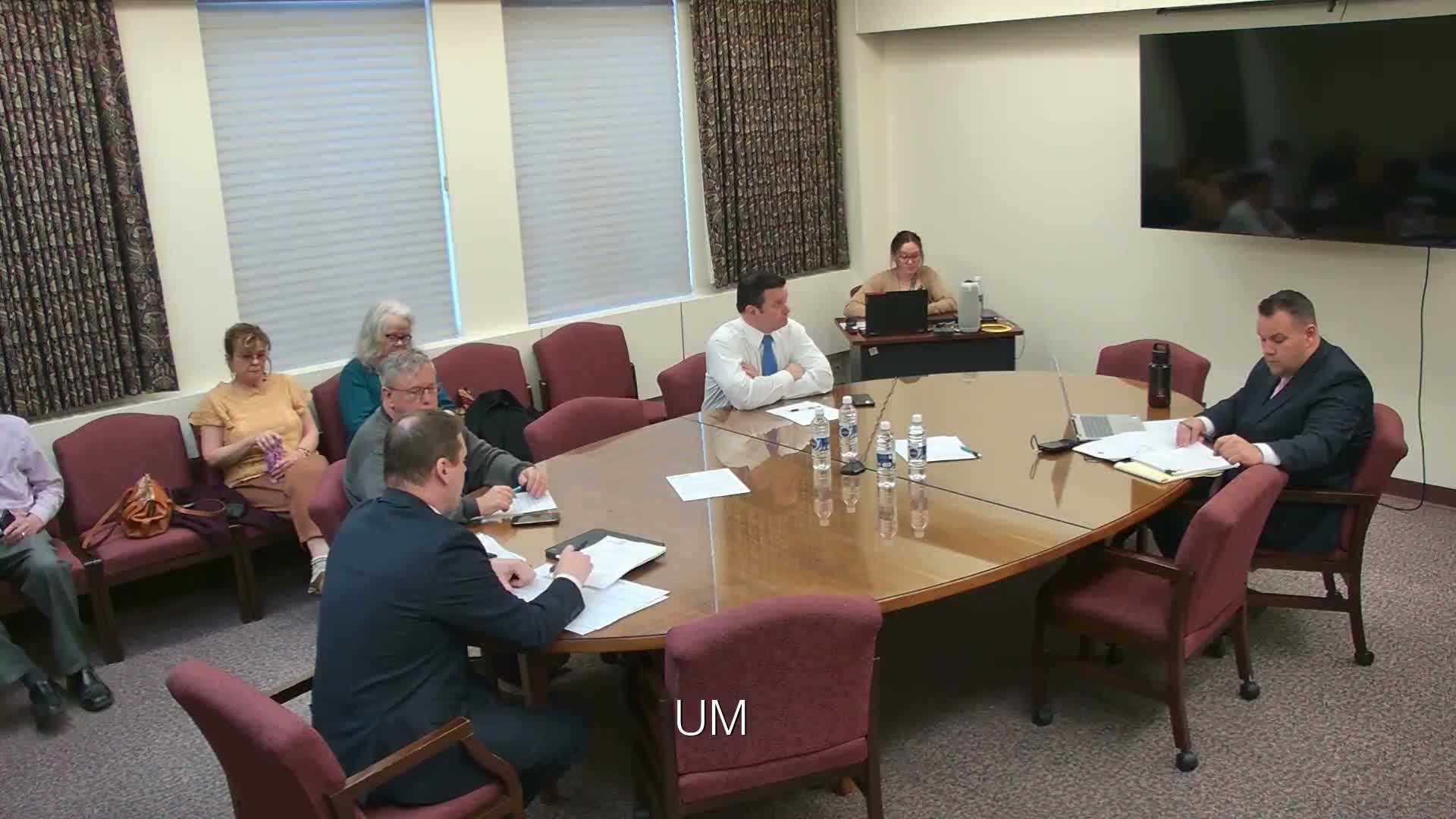
Allegany County commissioners on Monday previewed a vote to repeal the county'level ban on automated speed cameras and asked staff to draft enabling legislation spelling out where and how cameras could be deployed.
"Tonight would be that your chance to take action on the speed cameras," Jason told the commissioners as he introduced the item, calling repeal "step 1" in a multi'step process. County staff and commissioners emphasized that state law limits placement on county roads to school zones and that expanding coverage to roads such as State Route 51 would require separate state legislation.
County attorney Lee told the board that "in order to have any action to place speed cameras under Maryland code, we need enabling legislation," and described options for the commission: specifically allow cameras at enumerated locations that meet state code, permit them at all locations that meet state criteria, or adopt a hybrid approach with local guardrails.
Commissioners debated whether approval of camera locations should rest with the sheriff or require joint sign'off; one commissioner said he would be comfortable delegating that authority to the sheriff, while others asked staff to draft options that could include the sheriff'sign'off requirement. Lee confirmed municipalities such as the City of Cumberland have separate legislative authority and would likely need their own enabling action to authorize cameras within city limits, though counties and municipalities could coordinate systems voluntarily.
Staff recommended a three'step path: repeal of the ban, adoption of enabling language for locations allowed under state code, and separate state'level requests for any expansion beyond school zones. Commissioners identified Cash Valley and State Route 51 as recurring priorities for residents, but Lee said any non'school'zone deployment would have to wait for state action.
The item was listed on the evening agenda for a formal vote; staff said they would prepare draft enabling legislation for the commission'meeting that follows if the repeal passes. The commission also invited input on potential guardrails such as required sheriff concurrence or specified categories of eligible locations.