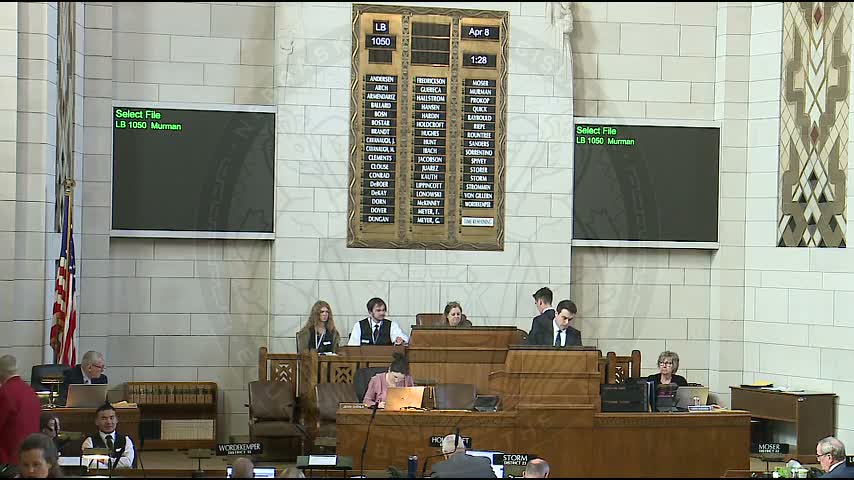
Nebraska Senate deadlocks on literacy overhaul as fierce debate centers on third‑grade retention
Loading...
Summary
After hours of debate, senators clashed over LB10‑50 and Senator Hughes' AM30‑52, which would task the Nebraska Department of Education with a model policy on reading interventions and possible retention. Lawmakers split over research, equity and unfunded costs; a cloture attempt failed and the amendment remained pending.
Lincoln, Neb. — Senators spent the afternoon and evening debating LB10‑50, a package of K‑3 reading reforms that touched off a wider fight over whether the state should use a model policy to encourage early screening and interventions or impose a default that could trigger third‑grade retention.
Senator Raybould, who moved to recommit the bill to the Education Committee, urged colleagues to slow down and study the policy’s costs. "We should be very mindful of that," she said, citing a fiscal note she summarized as "$850,000 this year, $800,000 next year, and $800,000 the following year" to the state and saying local districts projected much larger expense. She also read letters from educators cautioning about mandatory retention and urged support for an interim study (LR440).
Senator Hughes offered AM30‑52, a white‑copy amendment that would direct the Nebraska Department of Education to develop a model policy covering screening, dyslexia identification, intervention strategies, data reporting and provisions that the model could include for retention in third grade — while preserving parental override rights. "We need to operate off of one screening tool, so we're comparing apples to apples," Hughes said, describing a universal screener and state technical assistance the amendment would require.
Supporters of the model‑policy approach argued it balances state guidance with district flexibility. "This amendment shifts from a prescriptive policy mandated in statute to a model policy developed by the Nebraska Department of Education," Hughes said, adding that NDE would convene an advisory group and provide technical supports to districts.
Opponents called the measure an unfunded mandate that could redirect scarce classroom time and local dollars. "Retention is one of the strongest predictors of a student eventually dropping out of school," Senator Raybould said, summarizing recent studies and urging investment in early interventions instead of holding students back as a primary tool. Lawmakers from districts such as Lincoln and Omaha repeatedly cited local estimates of the cost and capacity impact; Raybould said Lincoln Public Schools had estimated a roughly $4.2 million local cost under earlier versions of the proposal.
The debate repeatedly returned to two questions: whether retention should be the policy default and whether the state will fund the interventions the model would require. Several senators said the model policy includes parental overrides and district adaptation, while others said the model's enumerated elements still risk becoming a de facto statewide mandate through accreditation or rulemaking.
Procedural votes punctuated the debate. Multiple motions — including recommit, reconsideration and a bracket motion — failed to secure passage. A late attempt to invoke cloture produced a 31–4 roll call in favor of ending debate, but that tally did not meet the threshold needed to close debate and move the amendment to an up‑or‑down decision. The clerk recorded the cloture tally as 31 ayes and 4 nays; senators noted it did not reach the required supermajority.
No final action was taken on AM30‑52 during this session segment; senators set additional floor time and then moved on to other select file business. The debate underscored the split in the chamber between senators emphasizing aggressive statewide standards and those warning of research, equity and funding pitfalls.
What happens next: AM30‑52 remained pending after the cloture attempt failed; supporters said they would continue to press the measure and to work on technical language, while opponents continued to urge an interim study and additional stakeholder involvement.