Lifetime Citizen Portal Access — AI Briefings, Alerts & Unlimited Follows
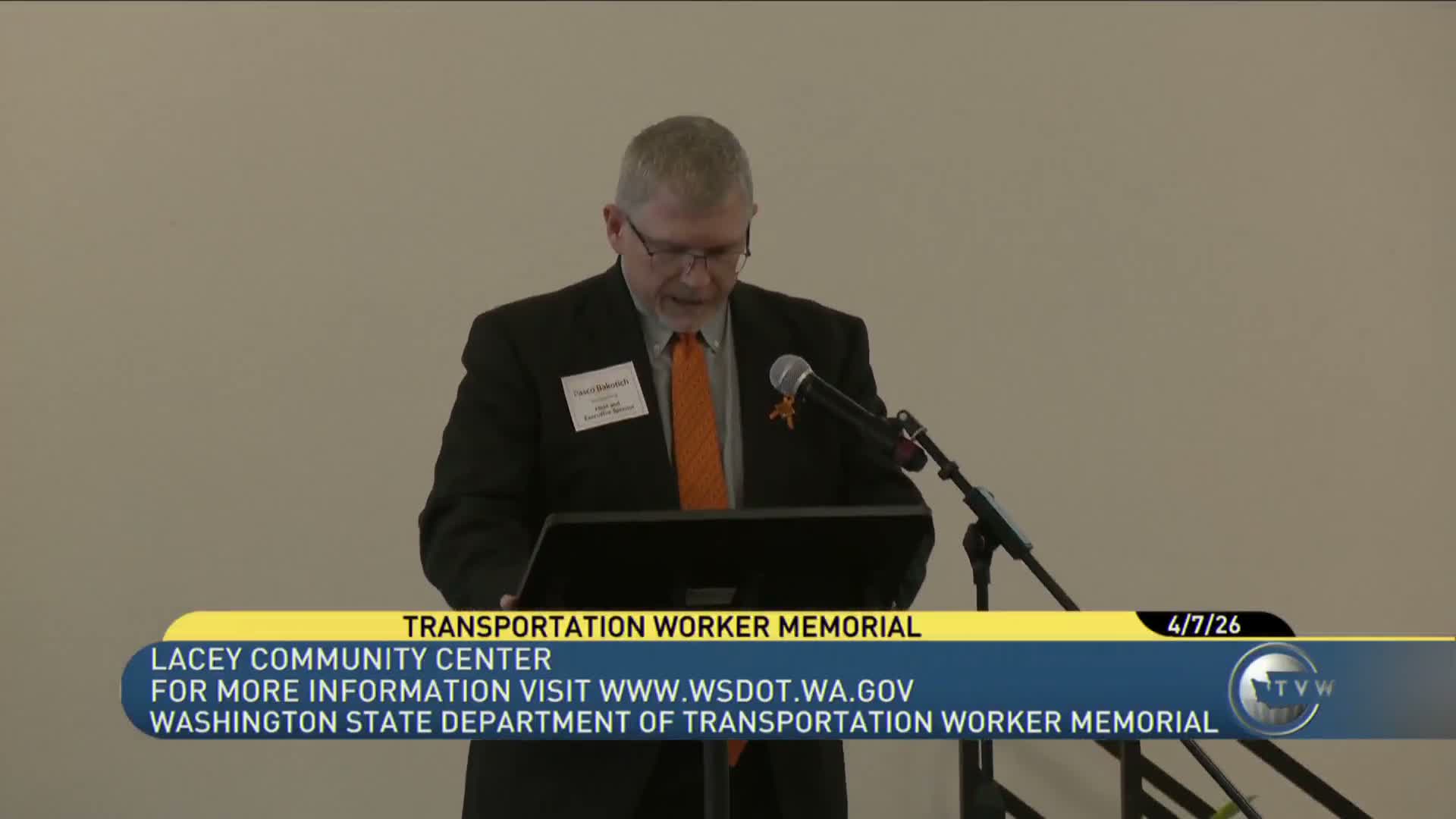
WSDOT leaders, troopers and a struck highway worker urge drivers to slow down at worker memorial
Loading...
Summary
At the Washington State Department of Transportation Worker Memorial, Secretary Julie Meredith, a highway maintenance worker who survived a collision and the Washington State Patrol chief urged motorists to slow down in work zones, citing recent crash and enforcement figures and describing expansion of the work‑zone speed camera program.
At the Washington State Department of Transportation Worker Memorial ceremony in Olympia, Secretary Julie Meredith urged motorists to slow down and pay attention in work zones and highlighted recent crash data and an expanding automated speed‑camera program.
"Safety is one of our agency's core values," Meredith said, noting that WSDOT has recorded 61 workers killed on the job since 1950. She told attendees that work‑zone crashes totaled 1,557 in 2025, a slight decrease from 1,607 in 2024, while fatal crashes rose from seven to nine, a nearly 30 percent increase, and stressed that most work‑zone crashes are preventable.
The secretary described the Work Zone Speed Camera program as a safety tool built with legislative and partner support. "The goal of the program isn't to issue tickets, but rather to get drivers to slow down and save a life," Meredith said, adding the program currently operates six rotating automated cameras in Western Washington and is planned to expand to 15 cameras by 2027.
Highway maintenance worker Josh Golosie recounted being struck earlier this year when a semi hit his snowplow on Interstate 90 near mile marker 115. Golosie described injuries that included neck and back trauma and facial bruising, said the other driver was cited by the Washington State Patrol for suspected driving under the influence and reckless endangerment, and urged the crowd: "Slow down a work zone. When you see a pickup truck, flashing lights, or any emergency response unit, give us space, put down the phones, and never drive impaired." He said he returned to work in February after medical leave.
The chief of the Washington State Patrol, identified in remarks as John Battiste, said troopers see firsthand how speeding, impairment and distraction endanger roadway workers, tow‑truck operators and first responders. He cited enforcement totals from the speed‑camera program: more than 87,000 violations detected and over 63,000 infractions issued to date in work zones, with repeat offenders making up about 9 percent of violations.
David Sowers, president of the Washington State Memorial Foundation, described the foundation's work supporting families of fallen and injured workers. He said the foundation has provided financial support to 312 families totaling more than $600,000 for scholarships, recovery and medical expenses. John Conrad, introduced as the foundation's past president and a former WSDOT assistant secretary, read the names of the 61 workers memorialized on the honor card and shared personal remembrances.
The ceremony concluded with families placing roses by cones honoring their loved ones and a reception for attendees. Meredith closed by renewing the call for collective action to reduce work‑zone risks: "Let's honor their memory here today by committing ourselves to work zone safety."