Get Full Government Meeting Transcripts, Videos, & Alerts Forever!
Get email alerts on the Transportation I24 topic
No spam. Unsubscribe anytime.
TDOT outlines I‑24 Southeast Choice Lanes plan; council presses for clarity on access control and maintenance
Summary
TDOT told Murfreesboro leaders the I‑24 Choice Lanes program is a roughly 26‑mile, $4.5 billion corridor project with an approved environmental assessment and upcoming NEPA and procurement milestones; council members pressed TDOT on which segments would remain full access control and what local maintenance obligations the city would inherit.
TDOT representatives briefed the Murfreesboro City Council workshop on the I‑24 Southeast Choice Lanes program, describing the project as a roughly 26‑mile corridor with an estimated cost of about $4.5 billion and a recently approved environmental assessment that clears the project to advance into NEPA decision and commercial procurement phases.
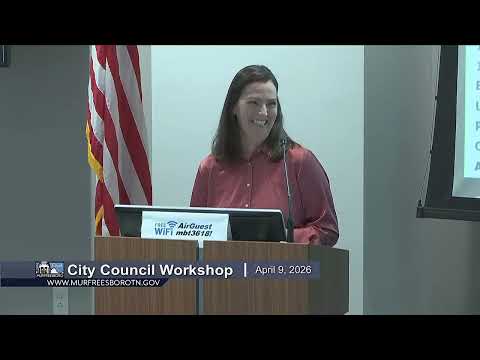
"My name's Rebecca Hammonds. I am the TDOT p3 communications officer," Rebecca Hammonds said, who described the program delivery as a public‑private partnership intended to leverage private financing for major corridor improvements. Paige Heintzeman, TDOT's P3 director of delivery, said the EA and recent public hearings led into a commercial procurement process that will select a best‑value proposer later this year and that the local government agreement being negotiated formalizes responsibilities among TDOT, municipalities and the developer.
Council members pressed TDOT staff on what the agreement means for city maintenance and access control. A council member asked what in the draft was defined as "full access control" and which portions would remain under city maintenance. Heintzeman and Hammonds said full access control generally refers to interstate‑style access (interchanges) that remain TDOT right‑of‑way; portions not classified as full access control could remain subject to municipal maintenance depending on location and existing agreements.
"Full access control would be, like, what's currently existing along the interstate system," Heintzeman said, and she added that areas that are not TDOT right‑of‑way — such as certain arterials within city jurisdiction — typically remain the city's responsibility and may be maintained per existing agreements.
Council members asked for clearer, attachable language defining access control and for TDOT to provide, in writing, which segments would be considered full access and which would potentially increase city maintenance obligations. One council member asked whether the city's vote on the local government agreement could block construction within city limits; staff replied they do not believe a council refusal would stop the program, though not entering the agreement could affect coordination and the city's working relationship on other state routes.
Several council members raised concerns about possible increased maintenance costs for landscaping, signals or sidewalks added by the developer. TDOT staff said the local government agreement will be tailored for each jurisdiction along the corridor and that they will return with more detail and red‑lines from legal staff for city review.
TDOT emphasized next steps: finalize NEPA documentation, submit materials to the Federal Highway Administration, select a developer team in summer procurement, and circulate the local government agreement for municipal review before it returns to council as an action item. TDOT also encouraged residents and stakeholders to review materials on the project website and sign up for the project newsletter.
The council did not vote on the local government agreement during the workshop; staff said the agreement would be brought before the council at a later regular meeting.