Get Full Government Meeting Transcripts, Videos, & Alerts Forever!
Get email alerts on the Land Use Adus topic
No spam. Unsubscribe anytime.
Council approves first reading to remove occupancy limits and ease rules for accessory dwelling units
Summary
On first reading the Loveland City Council voted 9-0 to amend the Unified Development Code to remove occupancy limits for unrelated residents and loosen restrictions on accessory dwelling units (ADUs) to align local rules with recent state law changes.
Loveland City Council voted unanimously on first reading to amend the Unified Development Code, removing local occupancy limits for unrelated residents and reducing restrictions on accessory dwelling units.
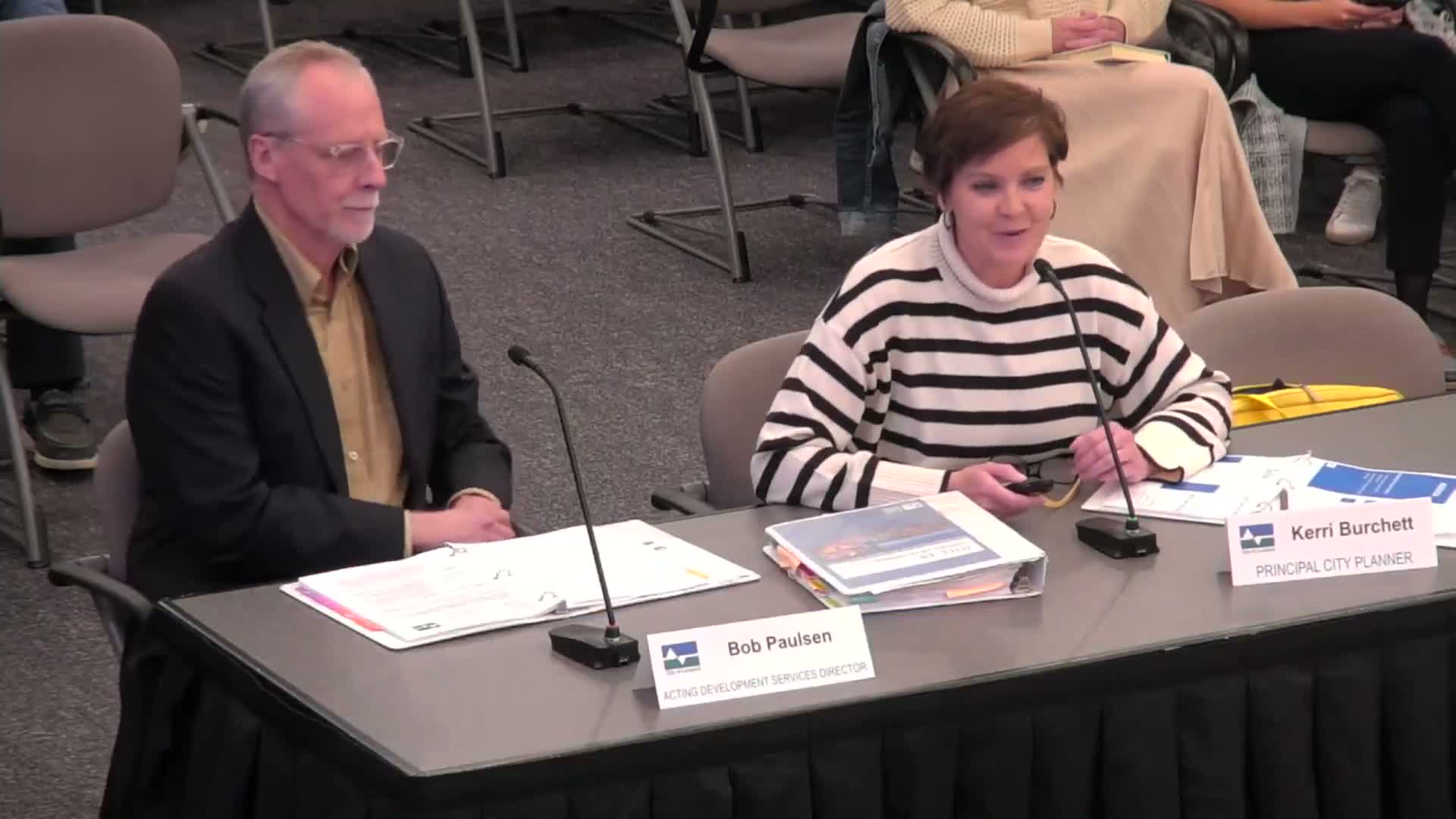
City planner Carrie Burshette told the council the changes are needed to align local code with two recent state laws — one that bans occupancy limits on unrelated individuals and another that encourages ADUs. “The amendments tonight are really to align our Unified Development Code with recent state approved legislation,” Burshette said, describing removal of boarding‑house categories and limits on architectural compatibility that would otherwise restrict ADU construction.
The move follows a 7–0 planning commission recommendation and staff outreach including the construction advisory board. Under the ordinance, ADUs would be permitted administratively across single‑family lots; detached ADUs must meet rear/side setback rules and building‑code safeguards. Staff proposed an optional allowance for larger ADUs on larger lots, subject to setbacks and building‑coverage limits.
During debate some council members raised concerns about changing the word “family” throughout municipal codes and the potential for mismatches with building and fire codes. Councilor Foley warned of unintended consequences if terminology diverged from technical building codes, saying the change could “create an absolute train wreck” for code users and insurers. Staff and several council members pushed back, noting the city already defines household and that occupancy language must be brought into alignment with state law.
An amendment to replace the word “family” across codes failed on a roll call vote. The main motion to approve Ordinance 67‑62 on first reading passed 9–0; second and final reading will be scheduled per the ordinance timeline.
What happens next: the ordinance moves to second reading where council may consider technical edits and the staff can produce clarified draft language to minimize conflicts with building and fire codes. The planning department will continue working with building officials on code alignment, setbacks, and fee/application processes.
Authorities cited: the presenters referenced state bills effective in 2024 (described in presentation as HB24‑1007 for occupancy and HB24‑1152 for ADUs).