Lifetime Citizen Portal Access — AI Briefings, Alerts & Unlimited Follows
Senate subcommittee advances bill to require OTAs to collect local accommodations taxes
Loading...
Summary
The Senate Finance Subcommittee heard hours of testimony on House Bill 38 76 and voted to report it favorably; supporters said it would create consistent, state-wide collection and remittance rules for online travel agencies, while platforms urged central administration and warned required merchant-of-record language would raise privacy and administrative concerns.
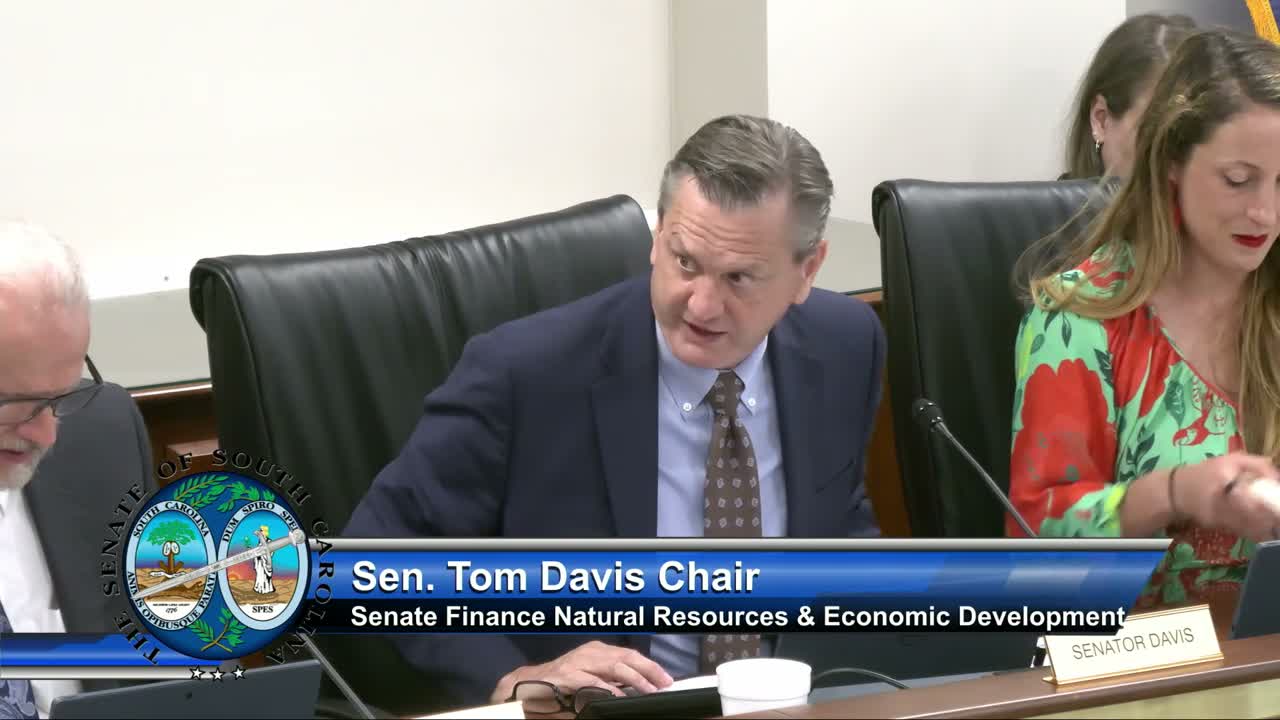
The Senate Finance Subcommittee on Natural Resources and Economic Development voted to report favorably on House Bill 38 76 after testimony from property managers, local officials and online travel platforms about who should collect and remit state and local accommodations taxes.
Supporters representing property managers told the committee the bill closes gaps left by piecemeal litigation and voluntary agreements and would ensure that "all OTAs across all jurisdictions" collect and remit applicable state and local taxes when a listing is not managed by a licensed property manager. "I urge you to support House Bill 38 76," one property manager testified.
Why it matters: Backers said the bill would provide consistent tax collection and enable licensed property managers to meet South Carolina's real estate- and escrow-related obligations when they act as agents of homeowners. Hank Davis of the South Carolina Restaurant and Lodging Association said the measure promotes "fairness, clarity and modernization" and asked for a favorable report.
What supporters said: Rick Elliott, a second-generation short-term rental property manager, told senators the bill is narrowly tailored to situations where a licensed manager works for an owner and that it protects homeowners who self-manage their listings. Property managers argued that some platforms act as de facto managers without assuming statutory obligations to hold funds in escrow or otherwise comply with state real estate law.
Platform concerns: Airbnb representatives said the marketplace-facilitator statute already requires platforms to collect state-administered taxes and urged that local accommodations taxes be administered centrally by the Department of Revenue (DOR). Travis, an Airbnb representative, said the company has collected and remitted substantial revenue in South Carolina and supports platform collection paired with centralized administration. "We mandatory platform collection paired with centralization is what we've advocated for successfully in those states," the representative told the committee.
Merchant-of-record debate: The bill's merchant-of-record language, which would make a licensed property manager the payment processor when they manage a listing, drew strong objections from platform witnesses. They said the language would require platforms to transfer guest payment processing to many property managers, potentially forcing platforms to share credit-card data and increasing consumer privacy and compliance risks. Katie Ashley, policy manager with Airbnb, said centralized processing enables the platform to be an advocate for guests and to resolve customer-service issues that could not be handled if payments were routed directly to third-party managers.
Local governments and administration: Sally McLeod of the South Carolina Association of Counties told the committee her association's priority is making sure accommodations taxes are remitted; she did not have jurisdiction-by-jurisdiction figures but offered to provide details later. Witnesses and senators discussed the trade-offs between direct local receipt of funds and centralization through DOR; some municipal officials reportedly prefer direct remittance so local revenues are received without an intermediary.
Committee action and next steps: With time limited, senators agreed to move H.B. 38 76 forward "with reserving all rights" so amendments could be considered at the full Finance Committee. Senator Goldfinch made the motion to report the bill to the next step; the chair called the question and, by voice vote, the subcommittee reported the bill favorably to the next stage with the understanding that amendments will be considered.
What remains unresolved: Witnesses disagreed about whether merchant-of-record language is necessary or administrable, whether a reliable real-time registry of licensed property managers exists, and whether centralizing local accommodations tax administration at DOR is preferable. Senators and staff said DOR has amendment language to share; the subcommittee moved the bill forward while reserving the option for changes at the next committee stage.