Get Full Government Meeting Transcripts, Videos, & Alerts Forever!
Get email alerts on the Public Finance topic
No spam. Unsubscribe anytime.
Finance briefing: Moody's downgrade tied to liquidity; county outlines plans to improve reserves
Summary
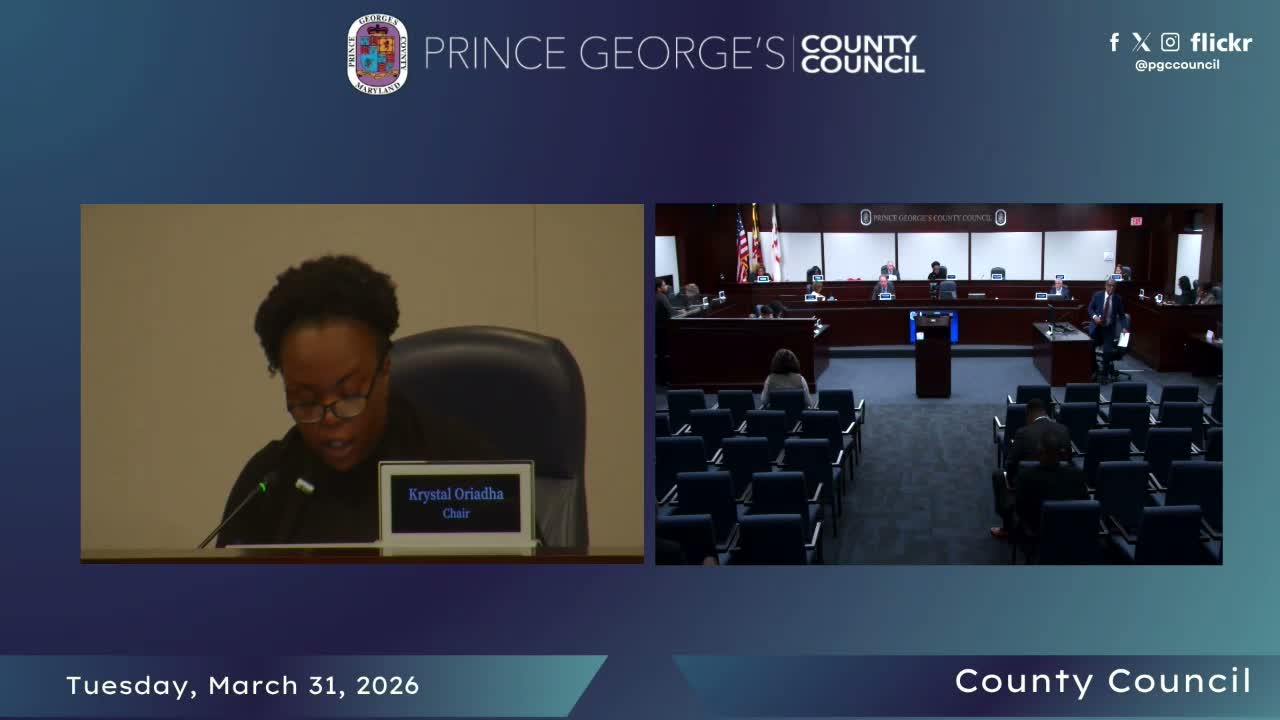
County finance staff briefed the council on debt-service drivers, reserves versus liquidity and the county's credit rating, noting a 2025 downgrade from AAA to AA+ tied to liquidity measures; staff described reserves, policy targets, and plans to improve liquidity over several years.
Prince George's County finance officials presented a briefing on debt service drivers, reserves and liquidity, and discussed the county's credit rating and what it means for borrowing costs.
Director Fair (Office of Finance) told the council annual debt service reflects principal and interest on outstanding bonds and is driven by capital program size, interest rates and issuance timing. He said the county has been "increasing our debt by 6% annually" from 2018 to 2027 (presentation comments). Staff explained the county maintains policy reserves equal to 10% of the general fund (a 5% policy reserve plus a 5% rainy-day fund) and identified the county's unassigned fund balance and other reserves.
On the county's credit rating, presenters said Moody's downgraded Prince George's County in 2025 from AAA to AA+ because of liquidity levels; staff reported Moody's calculated county liquidity at 20.3% while Moody's requested a target of 33.3% for comparable triple-A counties. Presenters recommended a multiyear plan (roughly five years) to improve liquidity and noted rating agencies consider many factors, including debt outstanding, reserves and long-term planning.
Councilmembers pressed staff on the cost of a downgrade, the ability to refinance and prepay debt, and the role of other funds (stormwater, solid waste) in overall county liquidity. Staff said refinancing and prepayment are considered opportunistically but the county must manage long-term obligations within the policy ceiling (debt-service policy limit of 8% of operating expenditures).
Public comment: Delonte Harrison asked the council to create a civic association director position to help build ties between residents and county government; he identified himself as president of the Camp Spring Civic Association.
Why it matters: the briefing addressed a central fiscal health question—the county's access to low-cost borrowing and the size and composition of reserves—which affects debt-service costs, budget choices and long-term fiscal resilience.
Next steps: staff will develop a multi-year plan to improve liquidity, supply more detailed budget breakout pages on debt service costs and work with council committees to brief state delegates as requested.