Get Full Government Meeting Transcripts, Videos, & Alerts Forever!
Get email alerts on the Immigration Enforcement topic
No spam. Unsubscribe anytime.
Council advances emergency immigration‑related bills to committee, including rules limiting enforcement on county property
Summary
The council introduced and reported favorably in committee an emergency package of immigration‑related bills including CB6 (guidance limiting immigration enforcement on county property), CB7 (Resident Kidnapping Protection Act requiring police verification of immigration enforcement identity), and CB8 (prohibition on facial coverings for law enforcement) with technical amendments and unanimous committee votes reported 10–0.
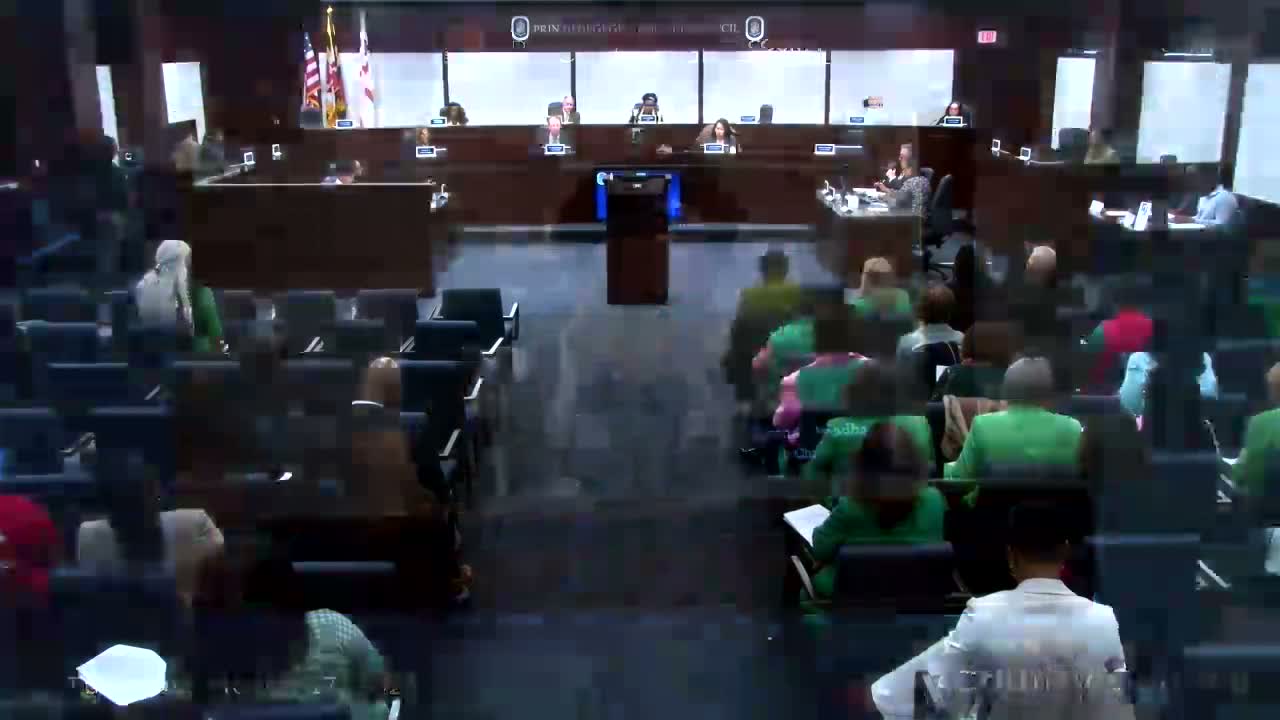
Prince George’s County Council members heard committee reports on a package of immigration‑related measures and advanced them to committee on March 17.
Committee of the Whole reported favorably on CB6‑2026, an emergency act that would require the county executive to publish guidance limiting where immigration enforcement may take place on county facilities and to develop signage templates explaining when enforcement is allowed or prohibited. Staff presented a policy analysis and a physical impact statement; Council member Olsen, the lead sponsor, said the bill would codify protections in the county executive’s executive order and ensure staff have clear protocols.
CB7‑2026, titled the Resident Kidnapping Protection Act, would authorize residents to request that the Prince George’s County Police Department verify the identity and authority of persons engaging in immigration enforcement activity; committee discussion added amendments requiring emergency services engagement and expanded outreach. CB8‑2026 would prohibit law enforcement officers operating in Prince George’s County from wearing face coverings that conceal identity while interacting with the public, with enumerated exceptions for undercover, tactical, medical or hazardous situations; committee reported a technical amendment to add state law references.
Committee votes were recorded as favorable 10–0 on the items as amended. Legislative staff described an amendment to CB6 that clarified an exception in the county’s existing Community Inclusiveness Act and replaced a reference to “violent crime under Maryland law” with the statutory definition of “crime of violence” to increase specificity.
Council members discussed the policy aims and the need for staff training and signage templates. The committee reports were entered into the record and bills were formally introduced and referred for further consideration and final readings.