Get Full Government Meeting Transcripts, Videos, & Alerts Forever!
Get email alerts on the Appointment Process topic
No spam. Unsubscribe anytime.
Salisbury council leans toward 12‑month cutoff for filling council vacancies; staff asked to draft new rules
Summary
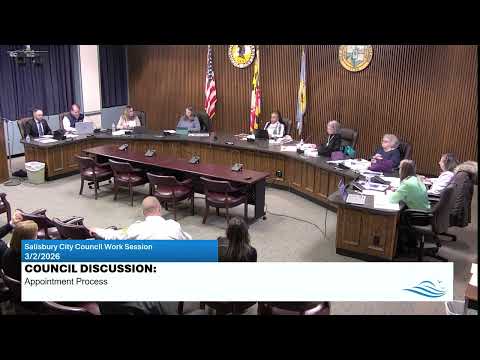
At a Salisbury City Council work session, members agreed in principle to a 12‑month threshold: vacancies with more than 12 months left would trigger a special election, while shorter gaps would be filled by appointment; council asked staff to draft formal language and discuss tie‑breaking options and public interview formats.
The Salisbury City Council discussed changes to its appointment process for council vacancies during a work session, with members coalescing around a 12‑month threshold for calling a special election.
Melissa, a council member, told colleagues she had researched other municipalities and said the council should decide how long must remain in a term before holding a special election. "A special election for six months to me just doesn't make a lot of sense," she said, and recommended that vacancies with a year or more remaining go to a special election while shorter vacancies use an appointment process.
Council members weighed other models. One member pointed to Frederick's contingency of seating the next-highest vote‑getter when a winner cannot be sworn in, and another noted Annapolis’s 15‑month approach. Members discussed alternatives to involving the executive branch to break ties, including internal ranked‑choice ordering among council preferences, and the practical need to coordinate special‑election timing with the board of elections (one member recommended adding roughly 60 days to allow for administration).
Several councilors said the public should have an opportunity to hear applicants, suggesting open interviews or public forums followed by a closed session for personnel deliberations. Members also recommended involving human resources to ensure any interview process complies with employment and open‑meetings laws.
The council did not adopt formal rules at the session. Instead, it asked a staff member to draft proposed language reflecting the 12‑month timeline, options for tie‑breaking without executive intervention, and a public interview format to bring back for review at a future meeting.
The process remains under discussion; council members said they expect the draft to be circulated to the council and to HR for legal and procedural review before a vote.