Get Full Government Meeting Transcripts, Videos, & Alerts Forever!
Get email alerts on the School Consolidation topic
No spam. Unsubscribe anytime.
Pasadena Unified trustees set four advisory outcomes, tell consolidation committee to focus on geography and enrollment
Summary
Trustees agreed by consensus to four desired outcomes to guide a superintendent advisory committee on school consolidation and asked the committee to prioritize geographic location and enrollment trends; public commenters urged transparency and pleaded to keep Marshall and other schools open amid post‑fire displacement.
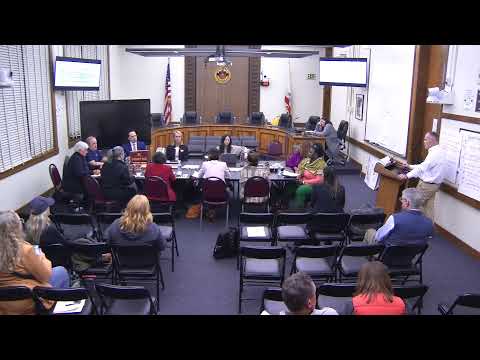
Pasadena — At a workshop meeting, Pasadena Unified School District trustees on Thursday used a consensus process to adopt four desired outcomes to guide the superintendent's school consolidation advisory committee and asked the committee to consider geographic location and enrollment trends as primary factors for identifying schools for further study.
The board's nonbinding consensus will be presented for formal approval at the next regular board meeting; staff and the district's consultant will provide the advisory committee with enrollment projections, site‑level data and background materials, including the district's prior resolutions on school size.
Why it matters: The meeting came after several public commenters described the fragility facing families still displaced by the Eaton Fire and urged the board to prioritize student stability. One parent, Sahara Uriarte, told trustees her family had been displaced and moved six times since the fire and asked the district to proceed with "transparency and kid gloves." PTA leader Lisa Kruse asked the board for a line‑by‑line explanation of where projected savings from consolidation would come from and questioned a proposed $233,000 expenditure for the consolidation process.
Facilitator Chris Steinhauser, a retired Long Beach Unified superintendent hired to lead the discussion, asked trustees to produce a small list of desired outcomes the advisory committee could use as a "North Star." After a 15‑minute small‑group exercise and readbacks by note takers, the board used a thumbs‑up consensus exercise to move four outcomes forward: ensuring fair and equitable access to high‑quality programs across schools; pursuing fiscal responsibility and transparent demonstration of cost savings; maintaining continuity of student programs and mitigating damage to student achievement; and ensuring the PUSD community is informed and has multiple opportunities for input during the committee's work.
Legal counsel and staff repeatedly emphasized that the board has already approved the metrics the committee will use for the equity impact analysis and that "factors" are separate: they are background data points used to generate the initial list of schools for review. The district attorney (identified in the meeting as Serene) cited the state law referenced in the meeting governing public input and the equity analysis, and warned trustees that adding unclear or overlapping factors can complicate the legally required equity review.
The district's consultant (referred to in the meeting as Joe from Total School Solutions) advised caution about adding too many or vaguely defined factors, saying they can double‑count the same measures and create unintended bias in the analysis; he recommended the committee examine the full set of schools with enrollment and geography data and then apply the approved metrics.
While trustees debated whether previously adopted enrollment ranges in an older district resolution should constrain the committee, the board reached a practical consensus (nonbinding) that the committee should at minimum receive and consider: system and site enrollment projections and geographic/proximity data. Staff said the committee application process produced 167 applicants and that two town halls are scheduled on Feb. 19; materials from committee meetings will be posted and televised.
Public comments framed much of the urgency. Warren Bleecker told trustees that closing high schools is "particularly disruptive" and can accelerate enrollment decline, while Rebecca Maker, a parent at Thurgood Marshall, described Marshall as the district's highest performing high school and urged trustees to find alternatives. The board did not take a formal vote on any consolidation recommendation at the meeting.
What happens next: Trustees will bring the four desired outcomes back for formal approval at the next board meeting; the superintendent and consultant will convene the advisory committee, present enrollment and geographic data and begin the equity impact analysis process. The committee's recommendations, if any, will return to the board for formal action.
Quotes: "I'm just requesting transparency and kid gloves," said Sahara Uriarte, a parent at San Rafael Elementary. "Closing high schools is particularly disruptive and causes real, identifiable harm to students," said public commenter Warren Bleecker. "No decisions about school consolidation have been made," facilitator Chris Steinhauser said during the meeting.
The meeting ended after trustees confirmed consensus on the items to forward; the board will vote on the outcomes at its next regular meeting.